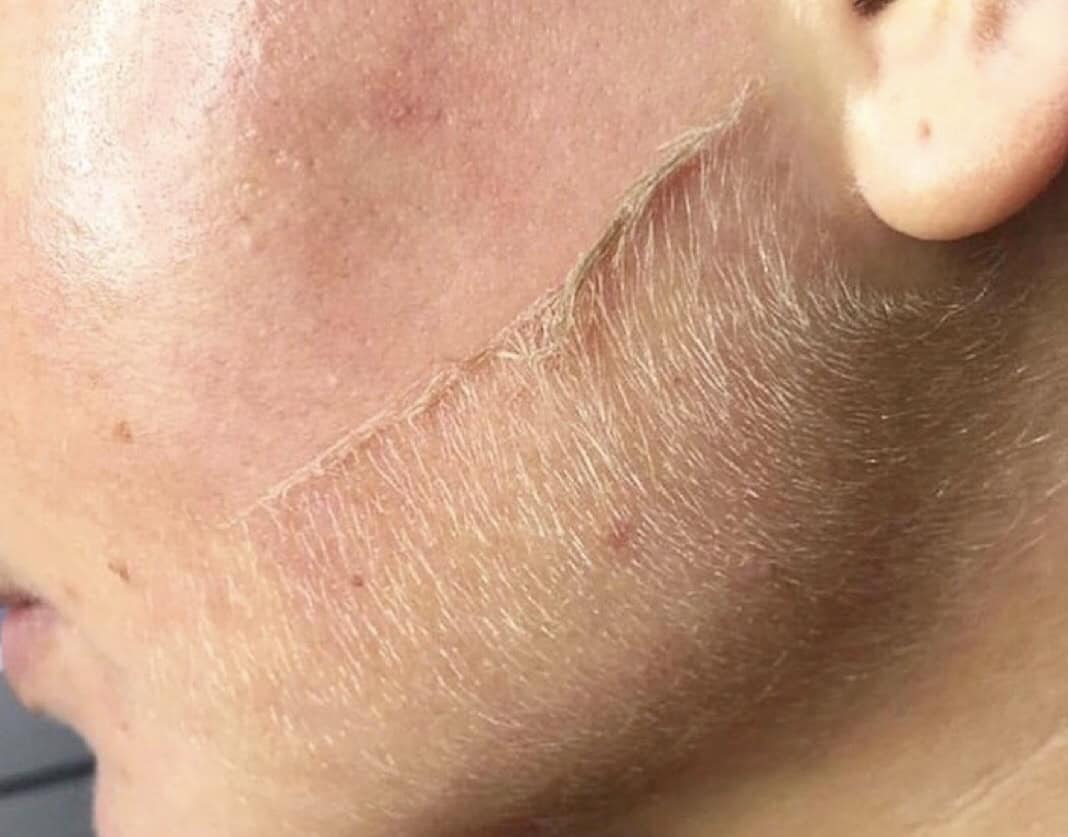
Standalone facial or treatment add-on
Run your finger across your cheek right now. Feel that? The slight roughness. The fuzz. The texture that makes your skin look a little flat and dull even when you know it shouldn’t.
Now imagine all of that gone. In about twenty minutes. With zero pain and zero downtime.
That’s dermaplaning. And it’s one of those treatments where you walk out, catch your reflection, and wonder why you didn’t do it six months ago.
Dermaplaning uses a sterile surgical blade to gently remove the outermost layer of dead skin cells and vellus hair — the fine peach fuzz that covers your face — in a single treatment. What’s underneath is smoother, brighter, and more luminous than anything a serum or scrub can reveal on its own. Your products absorb better. Your makeup glides on like it’s supposed to. And your skin looks like it’s lit from within.
At Illume, dermaplaning is available as a standalone facial or as an add-on to any of our other facial treatments — including your Illuminate Facial, DiamondGlow, or before microneedling and laser treatments for enhanced results.
What Is Dermaplaning?
Dermaplaning is a professional mechanical exfoliation treatment performed by a trained aesthetician using a sterile, surgical-grade scalpel held at a precise 45-degree angle to the skin. In careful, feather-light strokes, the blade glides across the surface of your face, removing two things at once:
Dead skin cells. The outermost layer of your skin — the stratum corneum — is a buildup of dead cells that make your complexion look dull, feel rough, and prevent your skincare products from absorbing properly. Dermaplaning removes this barrier in a single pass.
Vellus hair (peach fuzz). The fine, soft facial hair that you might not think about but that traps oil, debris, and product buildup. Removing it creates a smoother surface that reflects light more evenly — which is why people consistently say their skin “glows” after dermaplaning.
The treatment is painless. Most patients describe the sensation as a gentle scratching — like a credit card edge being lightly drawn across the skin. No numbing needed. No redness that lasts more than an hour. No hiding afterward.
Why Professional Dermaplaning Is Different from What You’ve Tried at Home
We know what you’re thinking. You’ve seen the dermaplaning razors at Target. You might even own one. And you’re wondering if there’s really a difference between that and what we do.
There is. A significant one.
The blade. Professional dermaplaning uses a sterile surgical scalpel — a single-use, medical-grade instrument designed for precision exfoliation. Consumer dermaplaning tools use small razors designed for body hair removal. Different blade. Different angle. Different depth. Different results.
The technique. Your aesthetician controls the blade at a specific 45-degree angle with consistent pressure across every zone of your face — adjusting for thinner skin around the eyes, firmer strokes on the cheeks, and careful navigation around the nose and jawline. That kind of precision requires training, not a YouTube tutorial.
The assessment. Before a professional treatment, your aesthetician evaluates your skin for conditions that would make dermaplaning inappropriate — active acne, inflammation, sunburn, recent laser work. A consumer tool doesn’t come with a skin assessment.
The depth. Professional dermaplaning removes the full stratum corneum layer uniformly. At-home tools skim the surface unevenly, removing hair but leaving much of the dead skin buildup intact.
The at-home version isn’t dangerous. It’s just not the same treatment. It’s like comparing a haircut you give yourself in the bathroom mirror to one from someone who went to school for it.
What Dermaplaning Does for Your Skin
Instant brightness. This is the most immediate benefit and the one patients notice walking out the door. Dead skin cells have a grayish quality that dulls your complexion. Remove them and the fresh, healthy skin underneath catches light differently. The glow is real and it’s immediate.
Smoother texture. The roughness, the bumps, the uneven patches that no moisturizer smooths out — dermaplaning creates a surface that’s genuinely smooth to the touch. The kind of smooth where you can’t stop touching your own face.
Better product absorption. Your serums, moisturizers, and treatments have been fighting through a barrier of dead skin to reach the living cells underneath. Dermaplaning removes that barrier. Everything you apply afterward penetrates up to 25% better. Your entire skincare routine becomes more effective.
Flawless makeup application. Makeup clings to dead skin and peach fuzz. It settles into texture. It looks cakey. After dermaplaning, foundation glides on evenly and sits against smooth, clean skin. If you have an event coming up, dermaplaning a day or two before is one of the best prep treatments we know.
Reduced appearance of fine lines. Not because dermaplaning fills lines — it doesn’t. But smoother skin with better product absorption and improved cell turnover creates a surface where fine lines are simply less visible.
Peach fuzz gone. The vellus hair that traps oil and debris and makes your skin look fuzzy in certain light — gone. Cleanly and completely. And before you ask the question every patient asks…
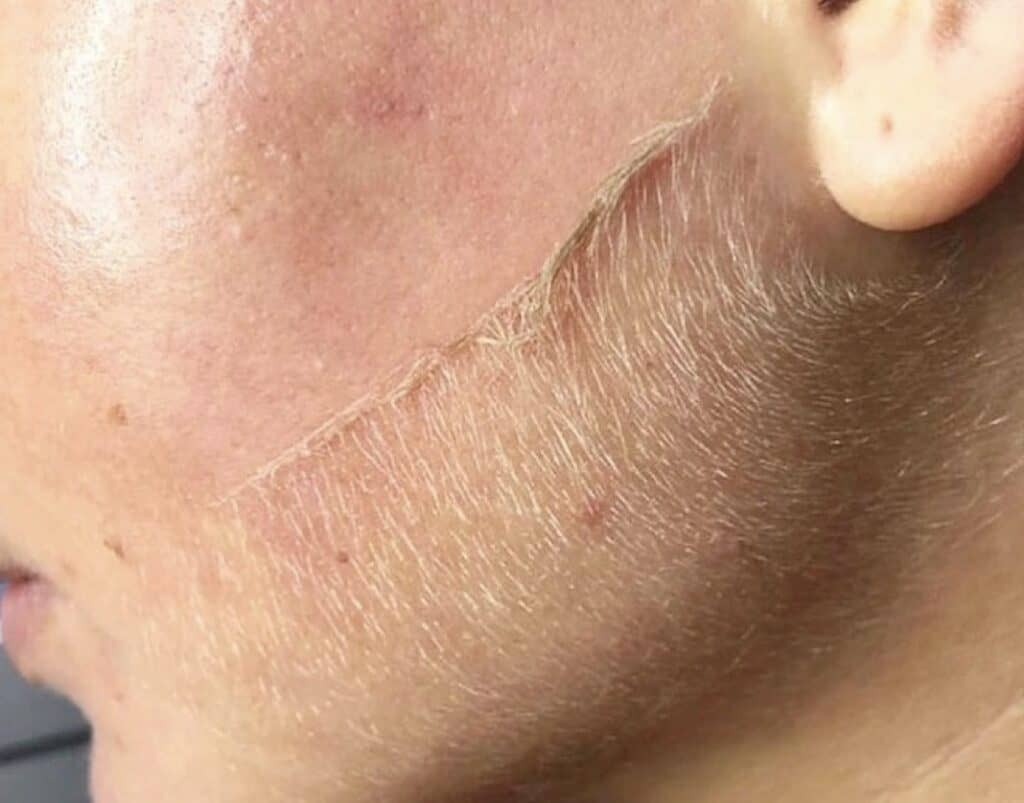
No, Your Hair Will Not Grow Back Thicker
We address this head-on because it’s the single most common concern patients bring up — and the answer is backed by decades of dermatological research.
Your hair will not grow back thicker, darker, or coarser after dermaplaning.
Hair thickness, color, and growth rate are determined by your genetics and your hormones. Not by what happens to the hair at the surface. Dermaplaning removes vellus hair at the skin’s surface — it doesn’t change the follicle, the root, or the growth cycle.
When the hair regrows in two to three weeks, it comes back at the exact same diameter, color, and texture it was before. It may feel slightly different for the first day or two because the tip is blunt (it was cut, not tapered naturally) — but it returns to normal within days. This is the same biology behind every other form of hair removal. Nothing about dermaplaning changes how your hair grows.
We tell every patient this. And every patient who comes back for their second appointment confirms it.
Dermaplaning as a Standalone Treatment or an Add-On
One of the best things about dermaplaning is its versatility. It’s excellent on its own and even better when paired with other treatments.
Standalone Dermaplaning
A standalone dermaplaning session takes about 30 minutes. You leave with immediately smoother, brighter skin, no peach fuzz, and a fresh canvas for your skincare routine. It’s the perfect maintenance treatment between more intensive services — or the ideal entry point if you’ve never done any professional skin treatment before.
Dermaplaning + Your Illuminate Facial
Dermaplaning is already listed as an available upgrade on your Illuminate Facial. Adding it means every product your aesthetician applies during your facial — the SkinMedica, Lira, Vivant, and AnteAge serums — penetrates deeper and works harder. The dead skin barrier is gone. The peach fuzz is gone. Your facial becomes significantly more effective.
Dermaplaning + Chemical Peels
Dermaplaning before a chemical peel removes the dead skin layer that would otherwise absorb the peel unevenly. The result: more uniform penetration, more consistent results, and a brighter outcome. This is one of the most popular combinations in aesthetic medicine.
Dermaplaning + Microneedling or Laser
Removing dead skin and vellus hair before microneedling or laser treatments creates a cleaner treatment surface. The device energy reaches the target tissue more efficiently, which can improve results. Your provider will advise on timing — typically dermaplaning is done one to two weeks before microneedling, or on the same day before laser depending on the protocol.
Dermaplaning vs Microdermabrasion
Both are physical exfoliation methods. Both make your skin smoother. But they work differently and serve different purposes.
| Dermaplaning | Microdermabrasion | |
|---|---|---|
| Method | Sterile blade at 45° angle | Diamond tip or crystal spray |
| Removes hair? | Yes — vellus hair + dead skin | No — dead skin only |
| Sensation | Painless — gentle scratching | Mild gritty sensation |
| Depth | Stratum corneum (surface) | Slightly deeper into epidermis |
| Downtime | None | None to minimal |
| Best for | Immediate brightness, peach fuzz, prep for other treatments | Deeper exfoliation, texture, pore congestion |
| Results | Immediate, single session | Best after a series of treatments |
Which is right for you? If you want immediate brightness and peach fuzz removal with zero discomfort, dermaplaning. If you want deeper exfoliation with serum infusion, our DiamondGlow (which is next-generation microdermabrasion) goes further. Many patients rotate between dermaplaning and DiamondGlow depending on what their skin needs that month.
What to Expect During Your Appointment
Session time: About 30 minutes for standalone dermaplaning. Add 10-15 minutes if it’s part of a longer facial.
Before treatment. No special prep. Arrive with or without makeup — we cleanse everything off. Avoid retinoids and active exfoliants for 24 to 48 hours before if your skin is sensitive.
During treatment. Your aesthetician cleanses and dries your face, then uses the sterile surgical blade in short, gentle strokes across each zone of your face — forehead, cheeks, chin, nose, jawline. You’ll feel a light scratching sensation. No pain. No numbing needed. Most patients find it relaxing.
Immediately after. Your skin looks brighter and feels smoother the moment you get off the table. Slight pinkness is possible for an hour or two. Your aesthetician applies a hydrating serum and SPF. You can wear makeup immediately and go straight back to your day.
Over the following weeks. Your skin stays smooth and luminous for three to four weeks as cells turn over naturally. Vellus hair begins regrowing at two to three weeks — at its normal thickness and color. Most patients schedule dermaplaning every three to four weeks to maintain results.
Who Should Skip Dermaplaning
Dermaplaning isn’t right for everyone, and we’d rather be honest about that than push a treatment on someone who won’t benefit.
Skip dermaplaning if you have:
- Active acne breakouts (the blade can spread bacteria and worsen inflammation)
- Inflamed, irritated, or sunburned skin
- Open wounds or cuts on the face
- A recent chemical peel or laser treatment (wait one to two weeks)
- Active rosacea flare-up or eczema
- A history of keloid scarring
- Current isotretinoin (Accutane) use
If you’re unsure whether dermaplaning is appropriate for your skin, your aesthetician will evaluate during your consultation. There’s always an alternative treatment that fits.
Frequently Asked Questions
What is dermaplaning?
Dermaplaning is a professional exfoliation treatment that uses a sterile surgical blade at a 45-degree angle to gently remove dead skin cells and fine facial hair (peach fuzz) from the surface of the skin. It’s painless, requires no downtime, and produces immediately visible results — smoother, brighter skin with better product absorption.
How much does dermaplaning cost?
We don’t publish specific pricing because treatment plans are personalized — standalone dermaplaning is priced differently than dermaplaning added to a facial or combined with other treatments. IllumèNaughty Beauty Bank members receive their discount. Your provider will discuss exact pricing during your consultation.
Will my hair grow back thicker after dermaplaning?
No. This is one of the most common myths in skincare and it’s definitively false. Hair thickness, color, and growth rate are determined by genetics and hormones — not by surface-level removal. Vellus hair regrows at the same diameter and color within two to three weeks. Decades of dermatological research confirms this.
Is dermaplaning just shaving?
No. Shaving uses a razor at a 90-degree angle to remove hair above the skin surface. Dermaplaning uses a surgical scalpel at a 45-degree angle to simultaneously exfoliate the dead skin layer AND remove vellus hair. Different instrument, different angle, different depth, different purpose. Shaving removes hair. Dermaplaning rejuvenates skin.
How often should I get dermaplaning?
Every three to four weeks is the standard recommendation. This aligns with your skin’s natural cell turnover cycle and the vellus hair regrowth timeline. Your aesthetician may recommend a different cadence based on your skin type and goals.
Can I get dermaplaning if I have acne?
Active breakouts are a contraindication — the blade can spread bacteria and worsen inflammation. If your acne is under control and you’re dealing with post-acne texture or dullness, dermaplaning may be appropriate. Your provider will evaluate your skin and advise honestly.
How is dermaplaning different from microdermabrasion?
Both are physical exfoliation methods. Dermaplaning uses a blade to remove dead skin + peach fuzz — painless, immediate results. Microdermabrasion uses a diamond tip or crystals for deeper exfoliation — no hair removal, best after a series. Our DiamondGlow combines microdermabrasion with vacuum extraction and serum infusion. Many patients benefit from both treatments on a rotating schedule.
Can dermaplaning be combined with other treatments?
Absolutely — it’s one of the most versatile add-ons we offer. Dermaplaning pairs beautifully with the Illuminate Facial (already an available upgrade), chemical peels (more even penetration), DiamondGlow (enhanced exfoliation), and as a prep before microneedling or laser treatments. Your provider can build it into any treatment plan.
The Simplest Treatment That Makes the Biggest Immediate Difference
No device. No laser. No needles. Just a sterile blade, a trained hand, and twenty minutes. And somehow, it’s one of the treatments our patients are most obsessed with.
Maybe it’s because the results are instant. Maybe it’s because there’s truly nothing to recover from. Or maybe it’s because there’s something satisfying about feeling your own face and thinking: that’s what my skin is supposed to feel like.