Some skin concerns go deeper than what topical products or gentle treatments can reach. Years of sun damage layered over fine lines. Acne scars that have resisted everything you’ve tried. Texture changes that make your skin feel like it belongs to someone else.
CO2 laser resurfacing is the most powerful non-surgical skin rejuvenation treatment available — and it works because it doesn’t just treat the surface. It removes damaged tissue with precision and triggers your body to rebuild from the dermis up, producing new collagen, new elastin, and genuinely new skin.
At Illume Aesthetics, we use two CO2 laser platforms — the Candela CO2RE and the UltraClear — giving our team the ability to customize every treatment to your skin, your concerns, and how much downtime you can accommodate. Whether that means a single transformative session or a series of lighter fractional treatments that fit your schedule, we have the technology to match your goals.
Schedule a Consultation — your provider will evaluate your skin and recommend the right approach.
What Is CO2 Laser Resurfacing?
CO2 laser resurfacing uses a carbon dioxide laser operating at a wavelength of 10,600 nanometers — a frequency that water molecules in skin cells absorb intensely. When the laser energy reaches your skin, it vaporizes damaged tissue in microscopically precise layers, removing as little as 25 to 50 microns per pass.
What makes CO2 laser resurfacing fundamentally different from lighter treatments is what happens next. Removing that damaged outer layer doesn’t just reveal fresher skin underneath — it triggers a deep wound-healing cascade that restructures your skin from the inside:
Phase one — inflammation. Within the first 72 hours, your body floods the treated area with growth factors, cytokines, and platelets. Fibroblasts activate. The healing process begins.
Phase two — proliferation. Over the next several weeks, fibroblasts produce new Type I and Type III collagen. New blood vessels form. The extracellular matrix rebuilds.
Phase three — remodeling. This phase continues for six to twelve months after treatment. Collagen fibers cross-link and strengthen. Elastin reorganizes. Skin density increases to 120 to 130 percent of its pre-treatment baseline — and stays elevated.
This is why CO2 laser resurfacing produces results that last five to ten years with proper sun protection. The collagen your body builds in response isn’t a temporary fix. It’s structural regeneration.
The CO2 laser also provides excellent hemostasis — minimal bleeding — because of how precisely the 10,600nm wavelength interacts with tissue. This gives your provider exceptional control over treatment depth and intensity, which translates directly to predictable, consistent results.
What CO2 Laser Resurfacing Treats
CO2 laser resurfacing is the most versatile skin resurfacing technology available because it addresses both surface-level damage and structural changes deep in the dermis. Clinical studies consistently show it delivers the highest improvement percentages among non-surgical skin treatments.
Acne Scars
If you’ve lived with depressed acne scars for years — boxcar scars, rolling scars, even ice-pick scars that have resisted other treatments — CO2 laser resurfacing delivers 60 to 80 percent visible improvement over a treatment series. The laser removes scar tissue and triggers collagen deposition that gradually fills and smooths the scarred areas. For severe scarring, this is often the most effective non-surgical option available.
Deep Wrinkles and Fine Lines
Perioral lines (around the mouth), crow’s feet, forehead creases, and nasolabial folds respond dramatically to CO2 resurfacing — studies show 70 to 90 percent improvement. The combination of tissue removal and deep collagen remodeling addresses wrinkles that Botox and fillers alone can’t fully correct.
Sun Damage and Age Spots
Decades of UV exposure leave behind uneven pigmentation, roughened texture, and lentigines (age spots). CO2 resurfacing removes the damaged layers and stimulates uniform regeneration — clinical data shows 85 to 95 percent clearance of age spots and 75 to 85 percent improvement in overall photodamage.
Skin Laxity
While CO2 laser resurfacing isn’t a replacement for surgical lifting, it produces meaningful skin tightening — 20 to 40 percent improvement — through collagen contraction and new elastin production. For early to moderate laxity, especially around the jawline, neck, and periorbital area, this tightening effect is a significant secondary benefit.
Uneven Skin Texture
Rough texture, enlarged pores, and the general loss of skin smoothness that accumulates over time respond at 70 to 80 percent improvement rates. Many patients describe the texture transformation as the most immediately noticeable result.
Surgical and Traumatic Scars
Post-surgical scars and scars from injuries can be improved by 50 to 70 percent, depending on the scar’s age, depth, and location. CO2 resurfacing remodels the scar tissue and blends it with surrounding skin.
Crepey Skin
The thin, tissue-paper texture on the neck and décolletage — where collagen and elastin have significantly depleted — responds well to fractional CO2. The treatment directly stimulates the structural proteins that crepey skin lacks.
→ For milder concerns or patients who prefer minimal downtime, microneedling offers a gentler collagen-induction approach that can be an excellent starting point or complement to CO2 resurfacing.
Fractional vs Fully Ablative CO2 Laser
The CO2 laser world has evolved significantly over the past two decades. Older fully ablative CO2 treatments — which vaporize the entire treatment surface — delivered dramatic results but required two to three weeks of intensive recovery and carried higher complication rates. Modern fractional technology changed the equation.
Fractional CO2
Fractional CO2 delivers laser energy in a pixelated grid pattern, treating 15 to 40 percent of the skin surface per pass. Between each microscopic treatment zone, bridges of untreated skin remain intact. These bridges dramatically accelerate healing because the surrounding healthy tissue supports and speeds regeneration.
The result: seven to ten days of downtime instead of three weeks. Lower risk of complications. Broader candidacy across skin types. And when delivered over a series of three to five sessions, long-term results that approach what a single fully ablative treatment achieves.
Fractional CO2 is now the standard of care for most patients. It delivers the best balance of results, safety, and realistic recovery.
Fully Ablative CO2
Fully ablative treatment still has a role — specifically for patients with severe photodamage, deep rhytids, or extensive acne scarring who want maximum single-session results and can accommodate 14 to 21 days of recovery. It’s primarily recommended for lighter skin types (Fitzpatrick I-II) due to the higher risk of pigmentation changes in darker skin.
How They Compare
| Fractional CO2 | Fully Ablative CO2 | |
|---|---|---|
| Best for | Most patients — scars, wrinkles, texture, photodamage | Severe photodamage, deep wrinkles in light skin |
| Surface treated per pass | 15–40% (pixelated) | 100% (continuous) |
| Downtime | 7–10 days | 14–21 days |
| Sessions needed | 3–5, spaced 4–6 weeks | 1–2, spaced 12+ months |
| Risk profile | Lower | Higher |
| Skin type candidacy | Fitzpatrick I–V (with protocol) | Fitzpatrick I–II primarily |
| Long-term results | Comparable (cumulative) | Maximal single-session |
Both Illume CO2 lasers — the Candela CO2RE and the UltraClear — handle fractional treatments. The CO2RE also offers fully ablative modes and its unique Fusion mode, which treats superficial and deep layers simultaneously in a single pass. Your provider will recommend the right approach based on your concerns, skin type, and recovery timeline.
Our CO2 Laser Technology
CO2 laser resurfacing is only as good as the device delivering it — and the provider behind it. At Illume, we’ve invested in two complementary CO2 laser platforms so your treatment is never limited by a single tool.
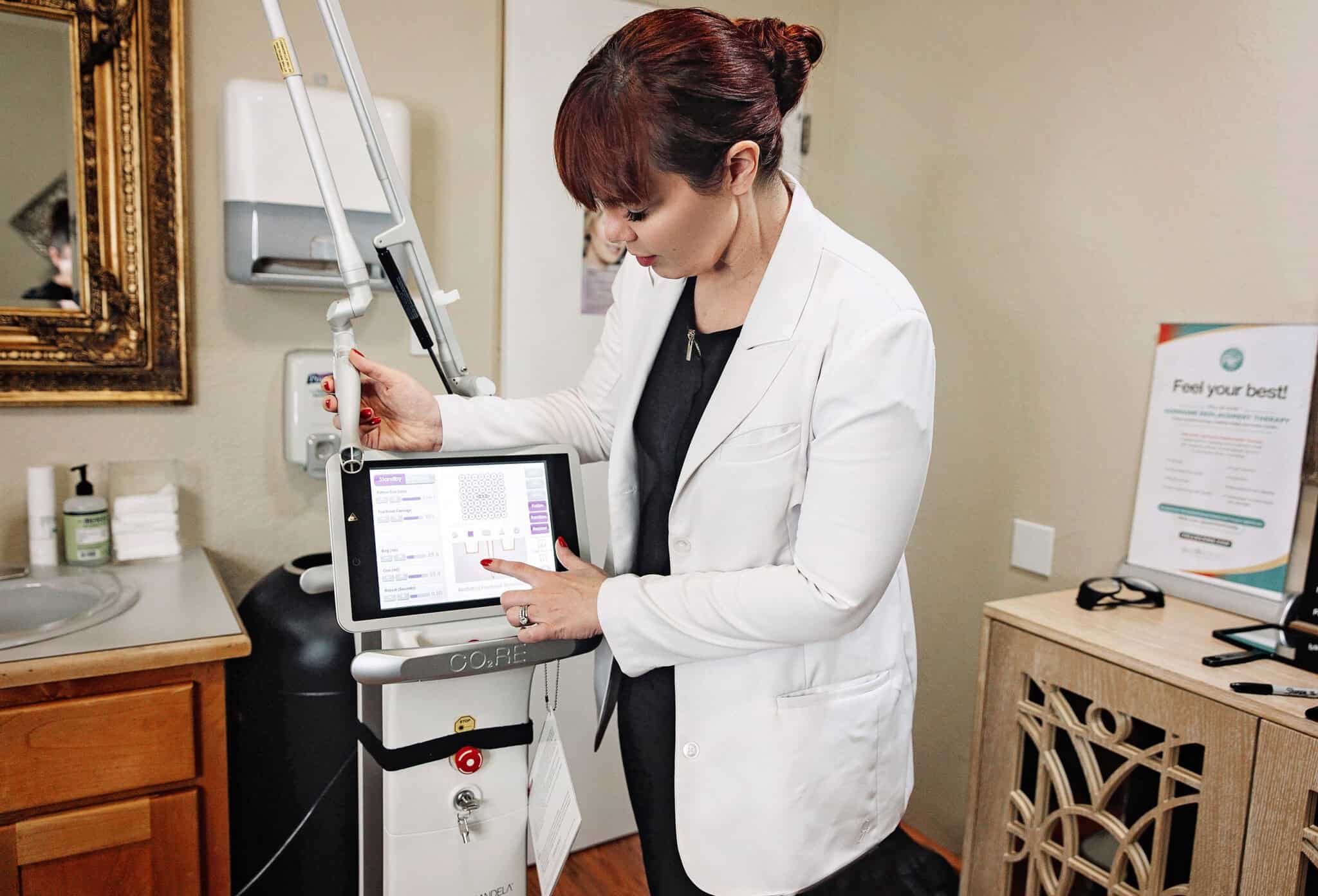
Candela CO2RE
The CO2RE is Candela’s flagship CO2 laser system — a platform trusted by dermatologists and plastic surgeons worldwide. What sets it apart is its multi-mode capability:
- Light mode — superficial resurfacing for fine texture, tone, and mild photodamage with minimal downtime
- Mid mode — moderate-depth treatment for wrinkles, moderate scarring, and pigmentation
- Deep mode — aggressive resurfacing for severe scarring and deep wrinkles
- Fusion mode — the CO2RE’s signature capability. It treats superficial and deep skin layers simultaneously in a single pass, delivering comprehensive resurfacing with fewer total passes and more controlled healing
The CO2RE’s precision scanning technology creates uniform, computer-controlled treatment patterns — eliminating the inconsistency that can occur with manual laser technique. This translates to predictable depth, predictable results, and predictable recovery.
UltraClear
The UltraClear represents the next generation of CO2 laser technology. Its cold ablation approach vaporizes tissue with less residual thermal energy than traditional CO2 lasers — which means effective resurfacing with reduced inflammation and faster healing.
For patients who want CO2-level results but need to minimize their downtime, UltraClear opens a middle path that didn’t previously exist. It’s particularly well-suited for patients who can’t take a full week away from work but whose concerns have graduated beyond what microneedling or non-ablative treatments can address. If you know you want the lighter, non-ablative end of the spectrum, our fractional laser resurfacing page walks through that option in detail.
Why Two CO2 Lasers Matter
Having both platforms isn’t redundant — it’s strategic. The CO2RE excels when maximum resurfacing power is needed: severe scarring, deep wrinkles, extensive photodamage. The UltraClear excels when the goal is meaningful improvement with reduced recovery. Your provider selects the device that matches your specific situation rather than making your skin fit a single tool’s capabilities.
What to Expect: Preparation and Treatment
Preparing for Your Treatment
CO2 laser resurfacing isn’t a walk-in treatment. Proper preparation protects your results and reduces your risk of complications. Your provider will build a pre-treatment timeline specific to your skin, but here’s the general framework:
Four to six weeks before: If you have a history of hyperpigmentation or melasma, your provider may start you on a prescription preparation protocol to condition your skin and reduce the risk of post-treatment pigmentation changes. You’ll establish a daily SPF 50+ habit if you don’t already have one.
Two weeks before: Discontinue retinoids and any aggressive exfoliation. Avoid significant sun exposure — no tanning, no sunburn. If you have a history of cold sores, your provider will prescribe a prophylactic antiviral starting 24 to 48 hours before treatment.
Day of treatment: Arrive with clean, product-free skin. If your treatment involves deeper settings, mild sedation or local anesthesia may be used for comfort. For lighter fractional sessions, topical numbing cream applied 30 to 45 minutes before treatment is typically sufficient.
During Treatment
The treatment itself takes 30 to 60 minutes depending on the area, the device, and the approach. Your provider adjusts the laser’s settings — fractional density, depth, number of passes — throughout the session based on the treatment zone. The periorbital area gets different settings than the cheeks, which get different settings than acne scars.
You’ll feel warmth and a prickling sensation. With proper numbing, most patients describe it as very tolerable. The laser’s precision scanning technology ensures uniform coverage, and your provider monitors your skin’s response in real time to ensure optimal treatment depth.
After treatment, your provider applies a specialized post-procedure ointment and gives you a detailed aftercare kit with everything you need for the first week of recovery.
CO2 Laser Recovery Timeline
Recovery from CO2 laser resurfacing is real. This isn’t a lunchtime treatment, and we’d rather be honest about what the healing process looks like than have you surprised. The good news: it’s temporary, it’s predictable, and the skin that emerges on the other side is worth every day of patience.
Days 1–3: The Acute Phase
Your skin will look and feel like a significant sunburn. Bright red, warm, swollen — particularly around the eyes and mouth. Day one is typically the peak of swelling, with 20 to 40 percent facial edema being normal. Weeping and early crust formation begin. Moderate discomfort is managed with prescribed analgesics and cool compresses.
What to do: Sleep with your head elevated. Apply prescribed ointments as directed. Cool compresses for 15 minutes, four to six times daily. Stay hydrated. Avoid touching your face.
Days 4–7: Crusting and Peeling
A golden-tan crust forms over the treated area and is at its heaviest around days four and five. Itching increases — resist the urge to pick. Underneath the crust, your skin is actively rebuilding. By days six and seven, crusts begin shedding naturally. Pink skin becomes visible underneath.
What to do: Continue prescribed ointments with gentle cleansing. Let crusts shed on their own — forcing them off risks scarring. Keep skin hydrated.
Days 8–14: New Skin Emerges
The majority of crusts shed during this phase. Your skin will be bright pink to salmon — new, fresh tissue that’s actively regenerating. Most patients can apply light mineral makeup by day 10 for coverage. Tenderness decreases significantly. By day 14, most patients are comfortable resuming normal social activities.
What to do: Gentle cleanser twice daily. Hydrating, fragrance-free moisturizer. SPF 50+ is now critical and non-negotiable — your new skin is extremely sun-sensitive. Light makeup acceptable from day 10 onward.
Weeks 2–4: Resolution
Erythema (redness) fades progressively — from 30 to 40 percent at week two to 5 to 15 percent by week four. Skin texture is already noticeably improved. Minor flaking may continue. You’ll start seeing early results, though the most dramatic improvements are still ahead.
Weeks 4–12: The Transformation
This is when the real payoff begins. Collagen synthesis peaks between weeks six and twelve. Wrinkles soften. Scar depressions fill. Texture smooths. Skin firmness and elasticity improve progressively. Most patients say this phase is when they truly see what the treatment has done — and the results continue building for up to twelve months.
For fractional CO2: Recovery is compressed — crusting typically days five through ten, redness resolving by weeks three to four. Most patients are socially presentable by day seven to ten.
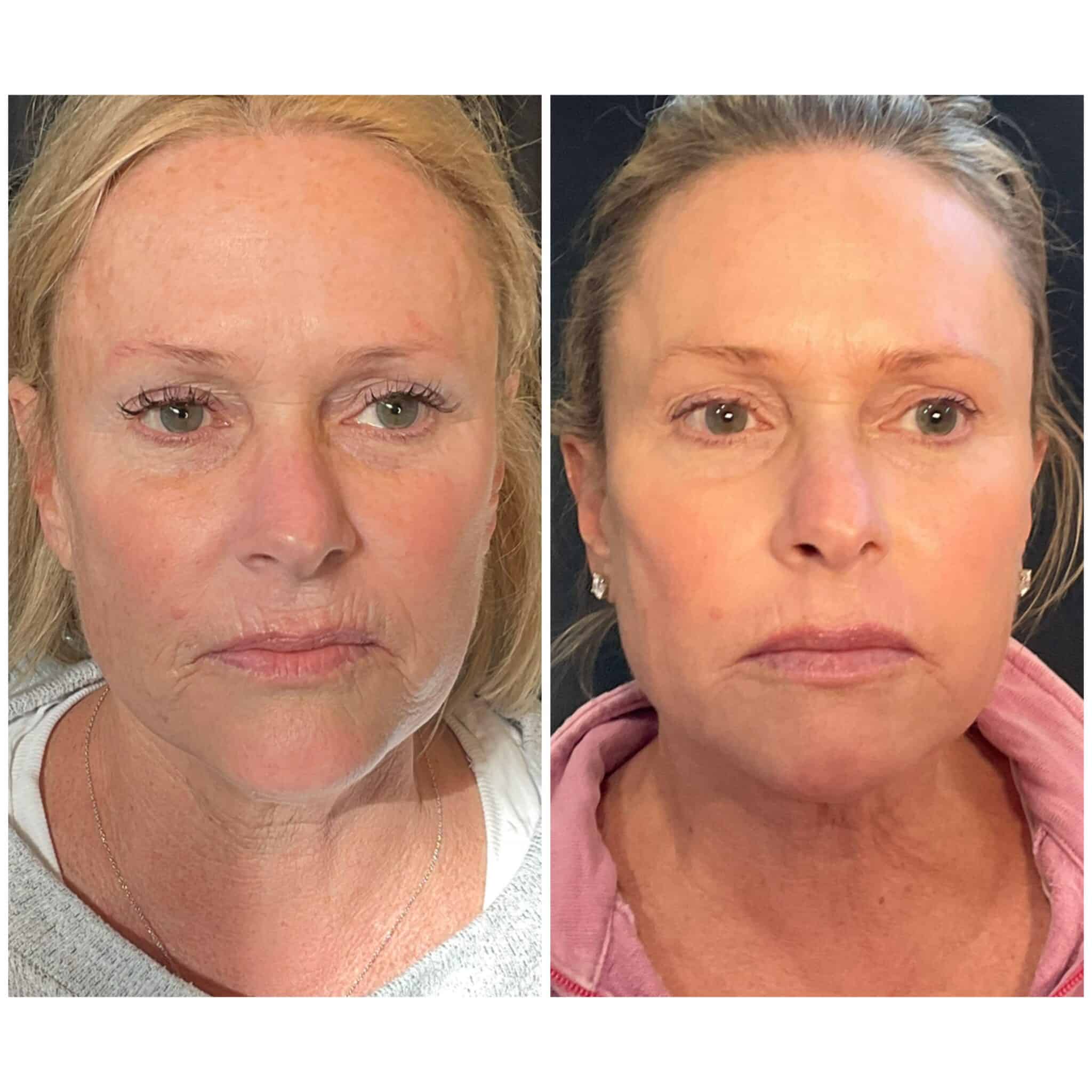
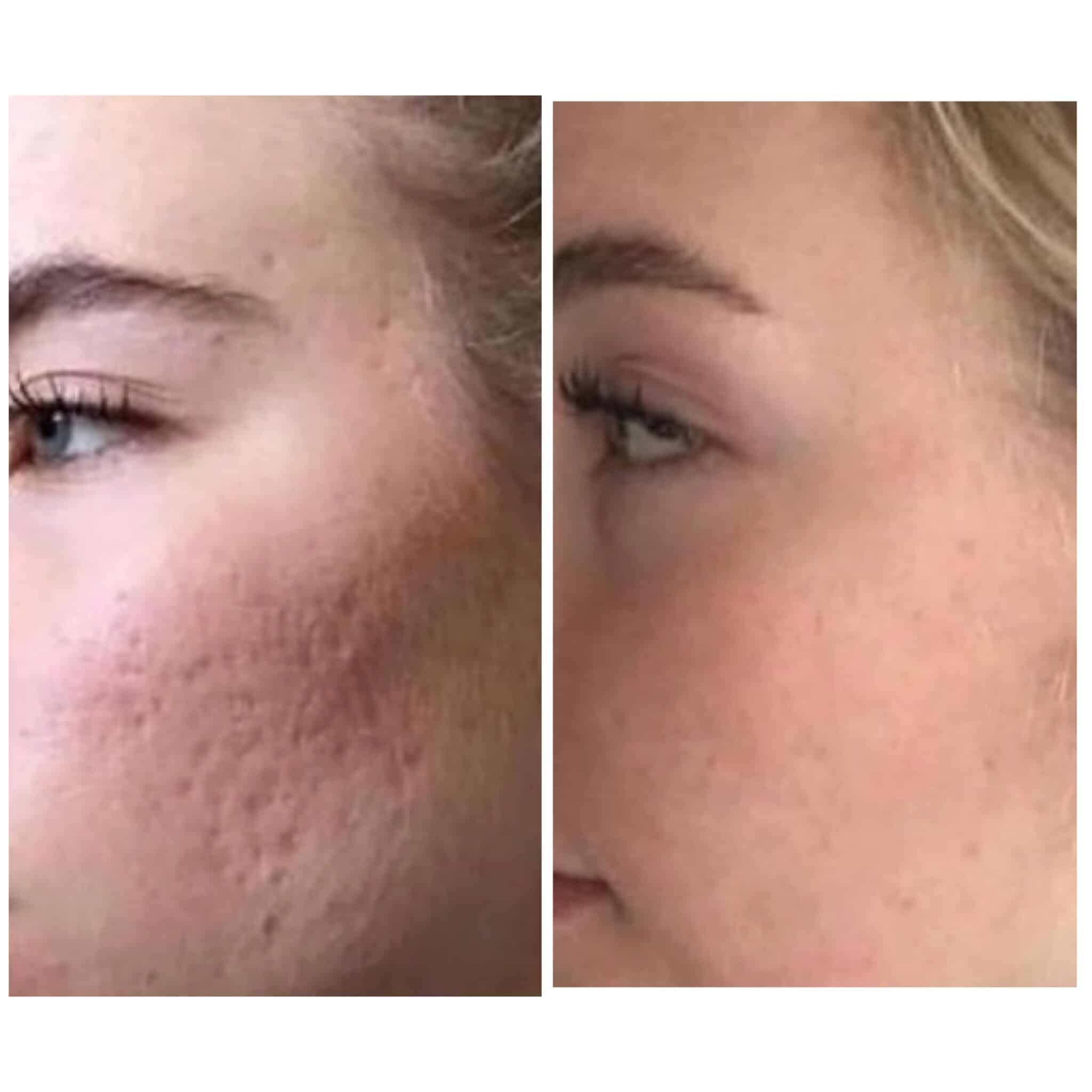
CO2 Laser Before & After
Results shown represent typical outcomes after a complete treatment series. All photos are of real Illume patients and are unretouched. Individual results vary based on skin type, treatment approach, and the specific concern addressed.
Your provider will show you before-and-after examples of patients with concerns similar to yours during your consultation.
CO2 Laser Resurfacing Cost in Ashland, OR
CO2 laser resurfacing is a premium treatment — and for good reason. It delivers the most significant non-surgical skin transformation available. The investment reflects the technology, the expertise required, and the durability of results that can last five to ten years.
Consider the comparison: a surgical facelift averages $9,536 according to the American Society of Plastic Surgeons — before anesthesia, facility fees, and follow-up care push the total to $12,000 to $30,000 or more. Recovery involves weeks of downtime, general anesthesia risks, surgical scarring, and the unpredictability of any surgical procedure.
CO2 laser resurfacing addresses many of the same concerns — wrinkles, skin laxity, texture, photodamage — at a fraction of the cost, with days of recovery instead of weeks, and without a single incision. For patients whose concerns are primarily skin quality rather than structural repositioning, it’s often the smarter path.
That said, we’re honest about when surgery IS the right choice. Significant jowling, deep neck laxity, or major structural changes in the mid-face require what only a surgeon’s hands can do. Your provider will tell you candidly if your goals are better served by a surgical consultation.
Your specific investment depends on the treatment approach (fractional vs. ablative), the device used, the treatment area, and the number of sessions in your series. Your provider will walk you through exact pricing during your consultation — before any treatment, with no surprises.
For patients committed to long-term skin health, the IllumèNaughty Beauty Bank membership makes ongoing maintenance treatments more sustainable and accessible.
Schedule a Consultation — your provider will build a treatment plan and walk you through specific pricing for your goals.
Why Choose Illume Aesthetics for CO2 Laser Resurfacing
Two CO2 laser platforms. Most practices that offer CO2 laser resurfacing have one device. Illume has two — the Candela CO2RE and the UltraClear — each with distinct strengths. This means your provider selects the platform that matches your skin and your goals, not the other way around.
Fractional and ablative capability. We offer the full spectrum of CO2 resurfacing, from light fractional refreshes to aggressive ablative treatments for severe concerns. Many practices can only offer one approach. At Illume, the approach fits you.
A complete treatment ecosystem. CO2 laser resurfacing doesn’t exist in isolation. Your provider can combine it with microneedling for maintenance, Sculptra for volume restoration, dermal fillers for targeted contouring, and Botox for dynamic wrinkles — all under one roof with coordinated care.
If skin quality is only one part of what you’re seeing — and laxity or volume loss are part of the picture too — our non-surgical facelift combines CO2 resurfacing with Profound RF and facial balancing for the most comprehensive non-surgical approach we offer.
Hundreds of five-star reviews. Our patients consistently trust us with their most visible asset — their skin. With hundreds of five-star Google reviews, the quality of care at Illume speaks through the people who’ve experienced it.
Experienced, certified providers. CO2 laser resurfacing requires a higher level of skill and judgment than most aesthetic treatments. Depth settings, pass count, fractional density — each decision affects your outcome. Every CO2 treatment at Illume is performed by a trained provider who understands the nuances of each device and each skin type.
→ Learn about the team behind your care on our Team page.
Frequently Asked Questions
How much does CO2 laser resurfacing cost?
The cost of CO2 laser resurfacing depends on the treatment approach (fractional vs. ablative), the device used, the treatment area, and the number of sessions. A fractional series typically involves three to five sessions. Your provider will give you specific pricing during your consultation before any treatment begins. The IllumèNaughty Beauty Bank membership makes ongoing maintenance more accessible.
Is CO2 laser resurfacing worth it?
For the right candidate — someone dealing with moderate to severe photodamage, acne scarring, deep wrinkles, or significant texture concerns — CO2 laser resurfacing consistently ranks as one of the highest-satisfaction treatments in aesthetic medicine. The results are dramatic, they’re long-lasting (five to ten years with proper sun care), and the collagen your body produces is structural and permanent. The trade-off is real downtime — seven to fourteen days depending on the approach. Your provider will help you determine whether CO2 is the right fit or whether a lighter treatment like microneedling would meet your goals with less recovery.
How many CO2 laser treatments do I need?
It depends on the approach. Fully ablative CO2 typically requires one treatment, occasionally two spaced twelve or more months apart. Fractional CO2 typically requires three to five sessions spaced four to six weeks apart. For maintenance after your initial series, one session annually or every two years sustains your results. Your provider will recommend the right number of sessions based on your concerns and how your skin responds.
Is there an age limit for laser resurfacing?
There is no strict age cutoff. Patients in their 70s and beyond can be excellent candidates for CO2 laser resurfacing — skin laxity, photodamage, and wrinkles don’t stop being treatable at a certain birthday. What matters is your overall health, healing capacity, and realistic expectations. Your provider evaluates your skin, your medical history, and your goals — not your age — to determine candidacy.
What’s the difference between CO2 laser and microneedling?
CO2 laser resurfacing and microneedling both stimulate collagen production, but they operate at different intensities. CO2 laser is more aggressive — it vaporizes tissue and triggers deeper remodeling, producing 60 to 90 percent improvement in scars and wrinkles with fewer sessions. Microneedling creates micro-channels without removing tissue, producing 40 to 70 percent improvement with more sessions and less downtime. Think of microneedling as the entry point and CO2 as the escalation. Many patients start with microneedling and graduate to CO2 when they want more dramatic results, or use microneedling for maintenance between CO2 sessions.
How long does CO2 laser recovery take?
For fractional CO2, most patients are socially presentable by days seven to ten — redness fades to a level that makeup covers easily. Full appearance recovery typically happens by weeks three to four. For fully ablative CO2, social downtime is 14 to 21 days, with residual redness potentially lasting eight to twelve weeks (easily covered with makeup after week two). The collagen remodeling that produces your final results continues for six to twelve months — you’ll keep seeing improvement long after the visible recovery is complete.
Can CO2 laser remove acne scars?
CO2 laser resurfacing is one of the most effective non-surgical treatments for atrophic acne scars. Clinical studies show 60 to 80 percent improvement in scar appearance over a treatment series. The laser removes scar tissue and stimulates new collagen deposition that fills depressed areas and smooths the surface. Boxcar and rolling scars respond best. Ice-pick scars — the deepest type — may benefit from a combination approach. Your provider will evaluate your specific scarring pattern and recommend the most effective treatment plan.
Is CO2 laser safe for darker skin tones?
Modern fractional CO2 technology has expanded candidacy significantly. Patients with Fitzpatrick IV and V skin types can be treated safely with modified protocols — lower fractional density, carefully calibrated settings, and strict post-treatment sun protection. The risk of post-inflammatory hyperpigmentation is higher in darker skin (studies show 20 to 30 percent incidence vs. 2 to 5 percent in lighter skin), but with appropriate precautions, most cases resolve within three to four months. Fully ablative CO2 is generally not recommended for darker skin types. Your provider will assess your skin type during consultation and recommend the safest, most effective approach.
Schedule Your CO2 Laser Consultation
CO2 laser resurfacing is the most powerful non-surgical skin transformation we offer. It’s not right for everyone — and that’s exactly why the consultation matters. Your provider will evaluate your skin, discuss your concerns and your timeline, and tell you honestly whether CO2 is the right path or whether another approach would serve you better.
If CO2 is the fit, you’ll leave the consultation with a clear treatment plan — which device, which approach, how many sessions, what the recovery looks like, and what it costs — before any commitment.
Call us: (541) 631-8387
Visit us: 993 Siskiyou Blvd Suite 1, Ashland, OR 97520