If you’ve researched Botox, you’ve probably seen Dysport mentioned alongside it — and wondered whether it’s the same thing, a competitor, or something entirely different. The short answer: Dysport is a neurotoxin in the same family as Botox, FDA-approved for the same purpose — smoothing wrinkles caused by muscle movement. But the two products aren’t identical, and for some patients and some treatment areas, Dysport is the better choice.
Schedule a consultation — we’ll recommend the right neurotoxin for your goals.
At Illume Aesthetics, we carry both Dysport and Botox because they behave differently in the tissue. Dysport spreads more broadly and kicks in faster. Botox stays more localized and is more predictable for precise areas. Your provider selects the right product — or combination of products — based on your anatomy, your treatment areas, and how your muscles respond. That’s the advantage of a practice that carries both instead of defaulting to one.
Hundreds of five-star Google reviews. Advanced injectable training. And a team that chooses the right tool for the job, not the only tool on the shelf.
What Is Dysport?
Dysport (abobotulinumtoxinA) is an FDA-approved injectable medical aesthetics treatment that temporarily relaxes the facial muscles responsible for dynamic wrinkles — the lines that form when you squint, frown, or raise your eyebrows. Like Botox, it works by interrupting the nerve signal that tells the muscle to contract, allowing the skin above to smooth out.
Where Dysport differs from Botox is in its molecular structure. Dysport has a smaller protein complex, which causes it to diffuse more broadly once injected. This isn’t better or worse — it’s a different behavior that makes Dysport particularly well-suited for certain treatment areas while Botox excels in others.
Dysport has been used in medical and cosmetic applications for over 15 years in the United States and even longer in Europe. It’s one of the most extensively studied aesthetic treatments in the world, with a well-established safety profile.
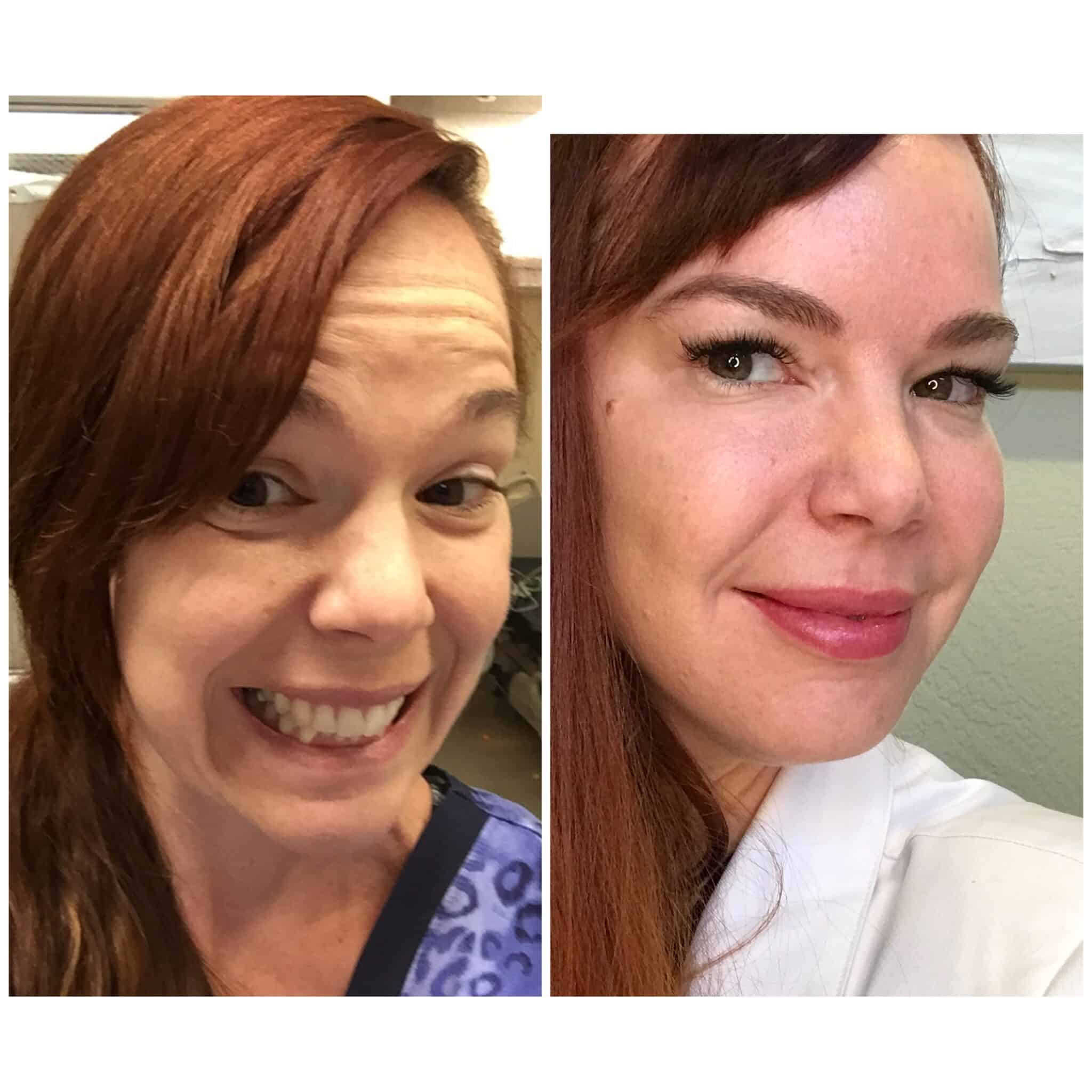
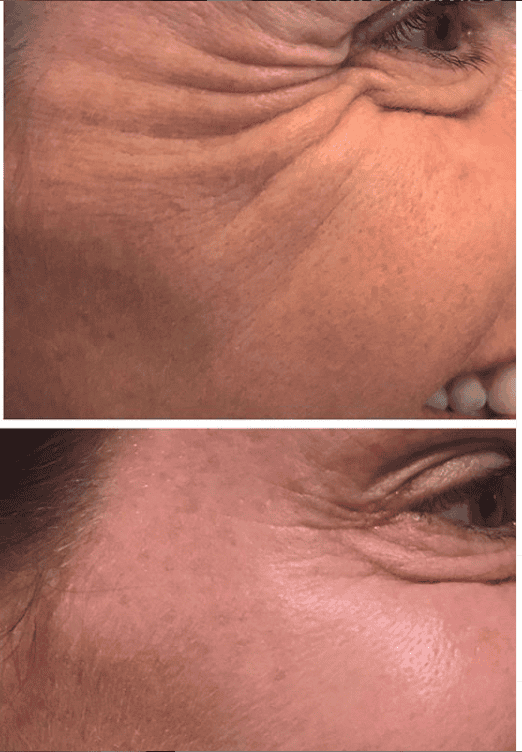
Dysport Before and After
The best Dysport results look exactly like the best Botox results — natural, refreshed, and impossible for anyone else to pinpoint. The difference is in the onset: Dysport patients often see results 2-3 days after treatment, while Botox typically takes 3-5 days.
These results represent what neurotoxin treatment achieves — whether with Dysport, Botox, or a combination. Your provider will recommend which product delivers the best result for each specific area.
See more results in our before and after gallery.
Dysport vs Botox
This is the question that drives most patients to this page — and the honest answer is that neither is universally better. They’re different tools with different strengths.
How they differ:
- Spread: Dysport diffuses more broadly once injected. This makes it excellent for large, flat treatment areas like the forehead, where you want smooth, even relaxation across a wide surface. Botox stays more localized, making it ideal for precise areas like crow’s feet or the brow where you want targeted control.
- Onset: Dysport typically kicks in at 2-3 days. Botox takes 3-5 days. If you have an event coming up and need results fast, Dysport has the edge.
- Duration: Both last approximately 3-4 months. Some patients find one lasts slightly longer than the other for them personally — but the difference is individual, not universal.
- Feel: Many patients describe Dysport as feeling slightly more natural in movement, particularly on the forehead. The broader diffusion creates a softer transition between treated and untreated areas.
Which one should you get? That depends on what you’re treating, how your muscles behave, and what your goals are. Your provider will assess your anatomy and recommend Dysport, Botox, or a combination — because at Illume, we carry both and use them strategically.
For a deeper comparison, read our Dysport vs. Botox guide →
Treatment Areas
Dysport treats the same areas as Botox — the difference is in which product your provider selects for each area based on its specific demands.
Where Dysport often excels:
- Forehead lines — The broad, flat forehead is Dysport’s strongest area. Its natural diffusion creates even smoothing across horizontal lines without the risk of creating visible “bands” of treated vs. untreated zones.
- Frown lines (“11s”) — Dysport is FDA-approved specifically for moderate to severe glabellar lines. It softens the vertical lines between your brows while preserving natural expression.
Where Botox may be preferred:
- Crow’s feet — The delicate area around the eyes benefits from Botox’s more localized effect, which prevents unintended spread to surrounding muscles.
- Brow lift — Precise placement is critical for a subtle lift at the tail of the brow. Botox’s targeted behavior offers more control here.
Areas where either works well:
- Bunny lines — Lines on the sides of the nose
- Lip flip — Subtle upper lip eversion
- Masseter (jawline slimming) — Slims a square jawline, relieves jaw clenching
- Chin dimpling — Smooths “orange peel” texture
- Neck bands — Softens vertical platysmal bands
Your provider may use Dysport on some areas and Botox on others in the same appointment — matching the right product to each area’s specific demands.
What to Expect During Treatment
Dysport appointments at Illume follow the same streamlined process as Botox — fast, comfortable, and no downtime.
Before treatment: Your provider reviews your goals, assesses your facial muscles, and marks the injection sites. This assessment determines not just where to inject but which product to use for each area.
During treatment (10-15 minutes): Dysport is injected with a very fine needle. Most patients describe a brief pinch. No anesthesia is required, though we offer NitroNox (laughing gas) for patients who want extra comfort.
After treatment: Return to your normal routine immediately. Avoid intense exercise for 24 hours and stay upright for 4 hours. Don’t massage or press on the treated areas.
Timeline: Results appear in 2-3 days — often a day or two faster than Botox. Full effect is visible at about 2 weeks. If this is your first neurotoxin treatment, your provider may start conservatively and bring you back at 2 weeks for a touch-up.
How Long Does Dysport Last?
Dysport typically lasts 3-4 months, similar to Botox. Some patients find Dysport lasts slightly longer for them; others find the opposite. The difference is individual and depends on your metabolism, muscle strength, and treatment area.
With consistent treatments over time, many patients find they can extend the interval between appointments as their muscles gradually require less product. Most patients settle into a schedule of 3-4 treatments per year for maintenance.
How Much Does Dysport Cost?
Here’s how to think about the investment.
The surgical alternatives to what Dysport achieves carry a very different price tag. A brow lift averages $5,000-$8,000 in surgeon fees alone — before anesthesia and facility costs push the total to $10,000-$15,000 or more. An upper blepharoplasty (eyelid surgery) runs $4,000-$8,000. Both require general anesthesia, weeks of recovery, and produce permanent results you can’t fine-tune if your preferences change.
Dysport achieves many of the same smoothing and lifting effects — softened forehead lines, a subtle brow lift, eliminated crow’s feet — at a fraction of those numbers, with zero surgery, zero downtime, and results you can adjust at every visit.
During your consultation, your provider will map out which areas to treat, recommend whether Dysport, Botox, or a combination is right for you, and give you clear pricing before any product is placed. No surprises, no pressure.
Our IllumèNaughty Beauty Bank membership includes member pricing on neurotoxin treatments, and we offer financing options to help you invest in yourself on your timeline.
Side Effects and Safety
Dysport has been FDA-approved for cosmetic use since 2009 and has an extensive safety profile backed by over 15 years of clinical use in the United States.
Common side effects (temporary):
- Mild bruising at injection sites — resolves in a few days
- Slight headache — usually resolves within 24 hours
- Minor swelling or redness at injection points — resolves within hours
Uncommon:
- Temporary eyelid heaviness (ptosis) — rare when performed by an experienced injector using proper technique. Resolves on its own as the product metabolizes.
Serious complications are extremely rare when Dysport is administered by a trained, experienced provider. The most important safety factor isn’t the product — it’s the person injecting it.
Why Choose Illume for Dysport
Both neurotoxins, used strategically. We carry Dysport and Botox and use them based on what each area of your face needs — not based on what’s in stock. Many of our patients get Dysport on the forehead and Botox for crow’s feet in the same visit.
Thousands of neurotoxin treatments completed. Our team’s experience means consistent results, accurate placement, and the judgment to know which product will work best for your specific anatomy.
Conservative philosophy. We start with the right amount and build from there. You’ll never leave with a frozen forehead or surprised eyebrows — because that’s not the result anyone wants, and it’s not how we practice.
Backed by hundreds of five-star reviews. Our patients come back because they trust us to get it right every time.
Comfort options. NitroNox is available for patients who are nervous about needles or want extra relaxation during treatment.
Frequently Asked Questions
Is Dysport better than Botox?
Neither is universally better — they’re different tools. Dysport spreads more and kicks in faster (2-3 days vs. 3-5), making it excellent for broad areas like the forehead. Botox stays more localized and offers more precision for small areas like crow’s feet. At Illume, your provider recommends the right one — or both — based on your anatomy and goals. For a full comparison, read our Dysport vs. Botox guide.
How long does Dysport last?
Dysport typically lasts 3-4 months, similar to Botox. Some patients find one lasts slightly longer than the other based on individual metabolism. Most patients come in 3-4 times per year for maintenance.
Does Dysport kick in faster than Botox?
Yes. Most patients see Dysport results in 2-3 days compared to 3-5 days for Botox. Full effect for both is at about 2 weeks. If you need results quickly before an event, Dysport may be the better choice.
Can I switch from Botox to Dysport?
Yes — switching is safe and common. Many patients try both over the course of several treatments to see which they prefer. Some patients use both at every visit — Dysport in one area, Botox in another. Your provider will adjust dosing appropriately since the two products are measured differently.
Does Dysport hurt?
About the same as Botox — a brief pinch with a very fine needle, over in seconds. Most patients find neurotoxin injections far less uncomfortable than they expected. NitroNox is available for patients who want extra comfort.
Can I get Dysport and fillers at the same appointment?
Yes. Many of our patients combine Dysport with dermal fillers or lip fillers in a single visit through our facial balancing approach. Dysport handles expression lines in the upper face while fillers restore volume in the mid and lower face.
Is Dysport safe?
Yes. Dysport has been FDA-approved since 2009 with over 15 years of safety data. It uses the same botulinum toxin type A as Botox. Side effects are generally mild — occasional bruising or a slight headache. Serious complications are extremely rare when administered by an experienced provider.
How is Dysport different from Xeomin?
Xeomin (incobotulinumtoxinA) is a third neurotoxin option that contains only the active botulinum toxin molecule with no accessory proteins. Some providers believe this may reduce the chance of developing resistance over time. At Illume, we carry Dysport and Botox — if you’re interested in discussing Xeomin or other options, your provider can walk you through the differences during your consultation.
Schedule Your Dysport Consultation
The best way to find out whether Dysport is right for you is to sit down with one of our providers. We’ll assess your anatomy, discuss your goals, and recommend the right neurotoxin — or combination — for each area of your face.
Call us: (541) 631-8387
Illume Aesthetics 993 Siskiyou Blvd Suite 1 Ashland, OR 97520 Monday — Friday, 9am — 5pm