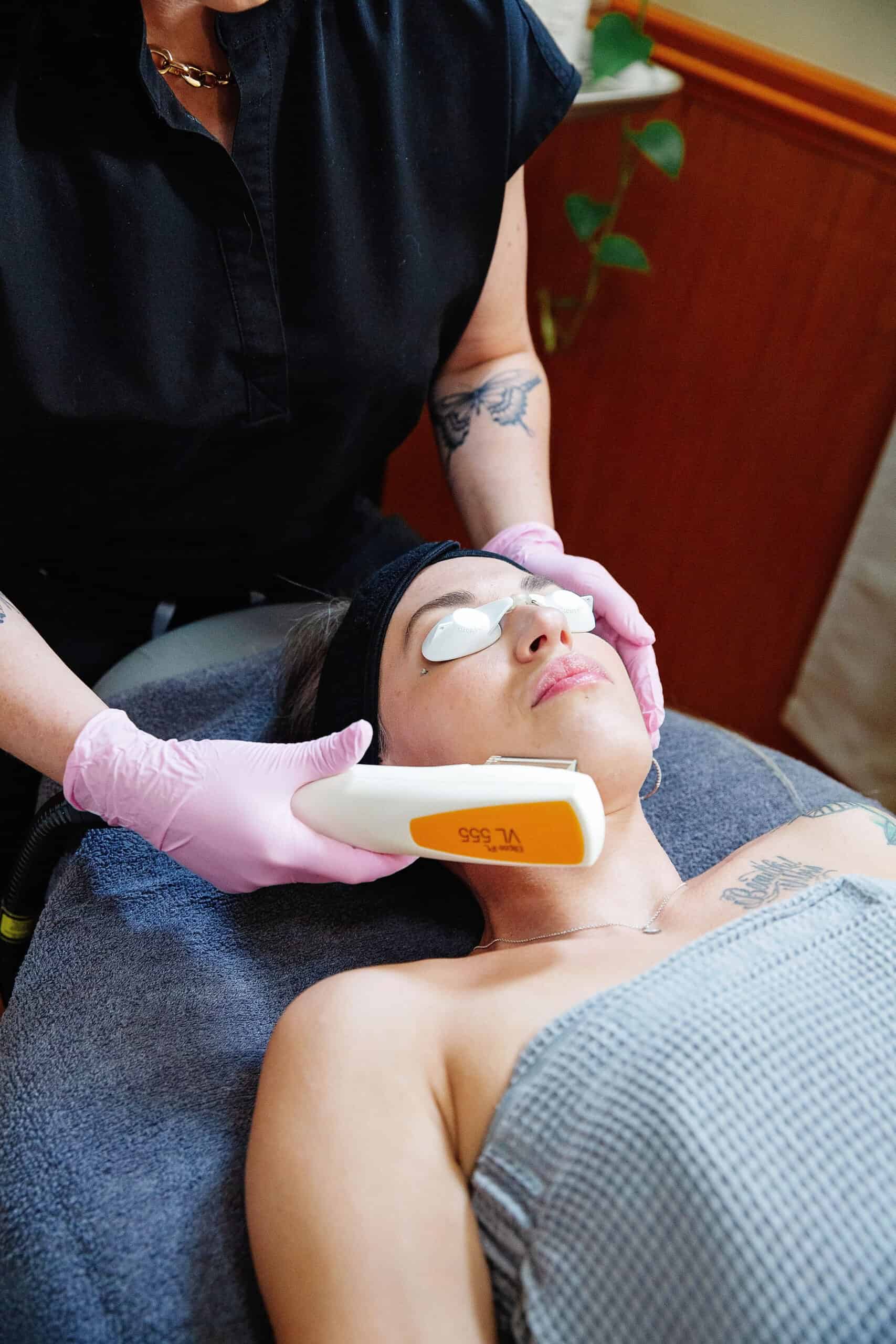
You know those brown spots that appeared after last summer? The ones you figured would fade on their own — and didn’t? Or the redness across your cheeks that started as occasional flushing and gradually became permanent? Or the tiny broken capillaries along your nose that you’ve been covering with concealer every morning for the past three years?
IPL was designed for exactly this.
An IPL photofacial uses intense pulsed light to target the pigment and blood vessels that cause brown spots, redness, broken capillaries, and uneven tone — without touching the surrounding skin. The light finds the discoloration, heats it, and your body clears the damaged cells naturally over the following days. Spots darken, rise to the surface, and flake away. Redness fades. What’s left is clearer, more even skin that looks like yours again — not like a skin condition you’re managing.
At Illume, we have three devices capable of delivering IPL: the Candela Nordlys with Selective Waveband Technology, the Venus Versa, and the UltraClear (which includes an IPL-like setting). That means your provider isn’t locked into one platform — they select the device and settings that best match your specific skin type and concerns.
How IPL Works — Light That Finds What Doesn’t Belong
IPL isn’t a laser. It’s different — and the difference matters.
A laser delivers a single, focused wavelength of light. It’s precise and powerful, but it targets one thing at a time. IPL delivers a broad spectrum of light wavelengths — typically 500 to 1200 nanometers — which means it can target multiple types of discoloration in the same session.
Here’s how it works: the light passes through the surface of your skin and is absorbed by specific color targets called chromophores. Melanin — the brown pigment in age spots, sun spots, and freckles — absorbs the light and heats up. Hemoglobin — the red in blood vessels — absorbs it too. The surrounding skin, which doesn’t contain those concentrated color targets, stays cool and unaffected.
The heat damages the targeted cells. Over the next one to two weeks, your body’s immune system clears the debris. Brown spots darken first (they’ll actually look worse for a few days — this is normal and expected), then flake off. Redness diminishes as damaged blood vessels are absorbed and cleared. What remains is skin that looks more even, more clear, and more like it did before the sun damage accumulated.
It’s elegant. It’s targeted. And it addresses multiple concerns in a single treatment that takes less than 30 minutes.
Our IPL Technology — Three Devices, One Goal
Most practices have one IPL device. We have three. That’s not about having more equipment — it’s about having the right tool for every skin type and every concern.
Candela Nordlys with SWT
The Nordlys is our primary IPL platform, and its Selective Waveband Technology is what sets it apart. Standard IPL delivers a broad blast of light across the full spectrum. SWT uses adjustable narrow-band filters to isolate specific wavelength ranges — targeting pigmentation without unnecessarily heating vascular structures, or targeting blood vessels without over-treating pigment.
This precision matters. It means more effective treatment with less collateral energy hitting tissue that doesn’t need it. Lower risk of complications. Better results. Particularly important for patients who have both pigmentation and vascular concerns — your provider can adjust the filters between passes to address each one optimally.
Venus Versa IPL
A versatile platform that complements the Nordlys for specific presentations. Your provider may select Venus Versa based on the treatment area, skin type, or the specific characteristics of your lesions. Having both devices means more flexibility in matching technology to your skin.
UltraClear IPL-Like Setting
Our UltraClear cold ablation laser also includes a setting that functions similarly to IPL for certain pigmentation and tone concerns. This gives your provider yet another option when building your treatment plan — particularly for patients who are addressing texture and resurfacing alongside pigment correction.
What IPL Photofacial Treats
Sun Damage and Brown Spots
This is the number one reason patients come to us for IPL. Years of UV exposure — even in Oregon, even through clouds, even if you wore sunscreen most of the time — leave behind brown spots, age spots, and a general darkening that no brightening serum can undo. IPL targets the excess melanin that creates these spots, breaking it down so your body can clear it. After a series of treatments, spots that have been there for years can be dramatically reduced or eliminated.
Rosacea and Facial Redness
If your cheeks flush easily and the redness never fully goes away — or if you’ve been told you have rosacea — IPL can be transformative. The light targets the dilated blood vessels that cause persistent redness, heating them until they collapse and are absorbed by your body. Many rosacea patients describe IPL as the treatment that finally gave them their natural skin tone back.
Broken Capillaries and Spider Veins
Those tiny red or purple lines along your nose, cheeks, or chin that makeup can’t quite cover. IPL targets the hemoglobin in these visible blood vessels, collapsing them. They fade over the weeks following treatment and don’t come back (though new ones can form over time with continued triggers like sun exposure or alcohol).
Uneven Skin Tone
Not one specific spot — just an overall unevenness that makes your skin look blotchy, patchy, or older than it should. IPL evens the playing field by addressing both pigment and vascular irregularities across the entire treatment area. The cumulative effect over a series is a complexion that looks unified and clear.
Freckles and Hyperpigmentation
Some patients love their freckles. Some patients want them gone. IPL gives you the choice — and the precision to treat specific areas while leaving others untouched. Post-inflammatory hyperpigmentation from acne or injury also responds well to IPL in appropriate skin types.
What Your Treatment Looks Like
Before your appointment. Avoid sun exposure and self-tanners for at least two weeks before treatment — active tan increases the risk of complications. Discontinue retinoids and photosensitizing products for one week before. Arrive with clean skin.
The treatment. Your provider selects the device, filter settings, and energy parameters based on your skin type and the specific concerns being treated. A cool gel is applied to the treatment area, and the IPL handpiece delivers pulses of light across the skin. You’ll feel a warm snap with each pulse — most patients describe it as a rubber band flick. Full face takes about 20 to 30 minutes. NitroNox is available if you’d like extra comfort.
Immediately after. Your skin will be mildly red and warm — like a light sunburn. This typically fades within a few hours. You can return to normal activities the same day.
The Recovery That’s Worth Understanding
This is the part that surprises first-time IPL patients — and the part that matters most to set expectations correctly.
Days 1-3. Brown spots intentionally darken. This is the treatment working — the damaged melanin is rising to the surface. Your spots will look more prominent than before treatment. This is normal, expected, and temporary. Don’t panic.
Days 3-7. The darkened spots begin to flake off. Gently. Without picking or scrubbing. Some patients describe it as very fine coffee grounds lifting away from the skin. Underneath is clearer, more even skin.
Days 7-14. Full clearance. The spots are gone or significantly faded. Redness has diminished. Your overall tone is more even. This is when patients typically say “oh — that’s what my skin looks like.”
After each session. SPF 30 or higher every single day. Non-negotiable. Sun exposure between sessions can reverse results and increase the risk of hyperpigmentation. Gentle cleanser and moisturizer. No active exfoliants for one week.
How Many Sessions You’ll Need
IPL is a cumulative treatment — each session builds on the last. Most patients need three to six sessions spaced three to four weeks apart for optimal results, depending on:
- How much sun damage or redness is present
- Your skin type
- Your treatment goals (correction vs. maintenance)
Some patients see significant improvement after a single session — especially for isolated dark spots. But the full benefit, particularly for rosacea and diffuse redness, unfolds over the series.
After your initial series, one to two maintenance sessions per year keep results fresh and address any new damage before it accumulates.
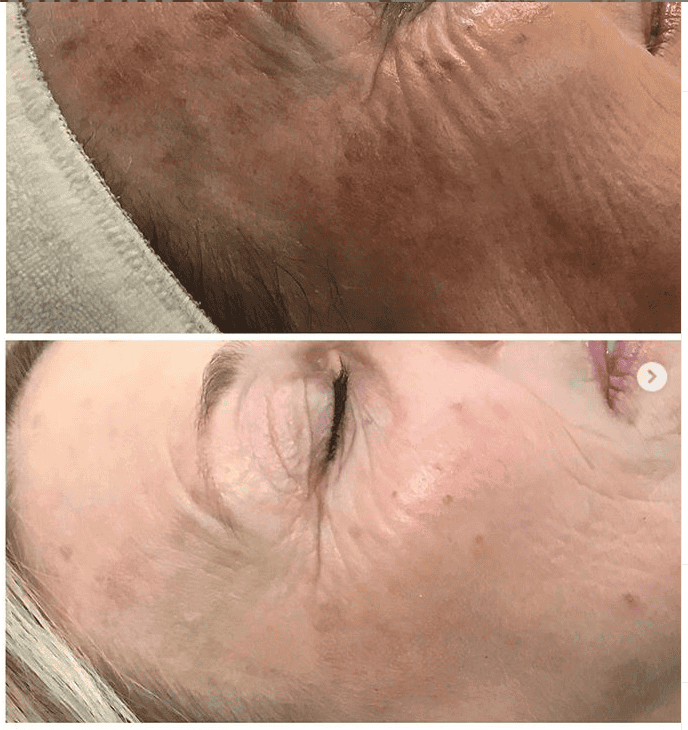
IPL Photofacial Before and After
Results from IPL photofacial treatments at Illume Aesthetics, showing clearance of sun damage, brown spots, redness, and uneven tone.
Individual results vary based on skin type, severity of concerns, and number of sessions. Spots darken before they clear — the “worse before better” phase is temporary and resolves within 7-14 days. Your provider will set realistic expectations during your consultation.
IPL vs Laser — When Each Is the Right Choice
We offer both. Here’s how to think about them.
Choose IPL when:
- You have multiple concerns at once — brown spots AND redness AND uneven tone
- Your sun damage is mild to moderate
- You want minimal downtime
- Your skin is Fitzpatrick I-III (fair to light brown)
- You want a treatment that addresses the whole complexion, not one specific problem
Choose laser when:
- You have deeply resistant pigment that IPL hasn’t cleared
- You need ablative resurfacing for texture, wrinkles, or scars (CO2 laser, UltraClear)
- You have darker skin that requires specific wavelengths for safe treatment
- You want maximum correction for one specific issue
- You want the deeper collagen remodeling that fractional laser resurfacing provides
Many patients benefit from both — IPL to clear pigment and vascular concerns first, then laser for texture and collagen remodeling. Your provider will assess your skin and recommend the approach that makes the most sense.
Who Should — and Shouldn’t — Get IPL
Good candidates:
- Fair to light-brown skin (Fitzpatrick I-IV) with sun damage, redness, or uneven tone
- No active tan or recent sun exposure
- Realistic expectations about the process (spots darken before clearing)
- Committed to SPF use between and after sessions
Not recommended:
- Very dark skin (Fitzpatrick V-VI) — the high melanin content increases burn risk. We’ll recommend alternative treatments that are safer for your skin.
- Active tan — even a mild tan changes how your skin absorbs light. We’ll ask you to wait.
- Pregnancy — insufficient safety data. We’ll defer until postpartum.
- Certain medications — photosensitizers like tetracycline antibiotics, high-dose NSAIDs, or certain retinoids may need to be paused. Your provider will review your medication list.
- Active skin infections or open wounds in the treatment area
If you’re not sure whether IPL is right for your skin type, that’s exactly what the consultation is for. We’d rather tell you honestly if a different treatment would serve you better.
Frequently Asked Questions
What is an IPL photofacial?
An IPL photofacial uses intense pulsed light — a broad spectrum of light wavelengths — to target melanin (brown pigment) and hemoglobin (red in blood vessels) beneath the skin’s surface. The light converts to heat in the targeted cells, damaging them so your body can clear them naturally. It treats sun damage, brown spots, redness, rosacea, broken capillaries, and uneven tone. Not a laser — IPL uses multiple wavelengths to address multiple concerns in one session.
How much does an IPL photofacial cost?
We don’t publish specific pricing because treatment plans are customized based on the area treated, the number of sessions needed, and which device is used. For context: IPL is significantly less than surgical or ablative laser approaches while addressing many of the same pigmentation and vascular concerns with minimal downtime. IllumèNaughty Beauty Bank members receive their discount. Your provider discusses exact pricing during your consultation.
How many IPL sessions do I need?
Most patients need three to six sessions spaced three to four weeks apart. Some see significant improvement after one session — especially for isolated dark spots. Rosacea and diffuse redness typically require the full series. After your initial course, one to two maintenance sessions per year sustain results.
What’s the downtime after IPL?
Minimal. Mild redness for a few hours after treatment. The key recovery feature: treated brown spots will darken for three to seven days before flaking off — this is normal and expected. Most patients resume normal activities the same day and wear makeup the next day. Full spot clearance at seven to fourteen days.
Is IPL the same as a laser?
No. IPL uses a broad spectrum of light wavelengths (500-1200nm) to target multiple chromophores at once. Lasers use a single, focused wavelength for highly specific targeting. IPL is better for treating multiple concerns in one session with minimal downtime. Lasers are better for resistant, deep, or specific targets. We offer both and will recommend the right approach for your skin.
Can IPL treat rosacea?
Yes — IPL is one of the most effective non-surgical treatments for rosacea, particularly the persistent redness and visible blood vessels (erythematotelangiectatic type). The light targets dilated blood vessels, collapsing them so your body can absorb them. Most rosacea patients see meaningful improvement over a series of three to six sessions.
Is IPL safe for dark skin?
IPL works best on Fitzpatrick I-III (fair to light-brown skin). The Nordlys SWT technology expands safe treatment to Fitzpatrick IV with careful settings and experienced providers. Fitzpatrick V-VI (very dark skin) carries higher risk and is not recommended for IPL — we’ll suggest alternative treatments that are safer for your skin type. Honest assessment of candidacy is a priority at Illume.
Can I get IPL if I have a tan?
No — active tan significantly increases the risk of burns and hyperpigmentation. Your natural melanin level is what we treat around. An elevated melanin level from tanning changes the equation in ways that make treatment unsafe. We’ll ask you to wait until your tan has fully faded (at least two weeks, ideally longer) before scheduling IPL.