Facial Balancing in Ashland, OR
Your face tells a story, and every feature plays a part. When one area loses volume or sits slightly out of proportion, it changes the whole picture. Facial balancing is the art of restoring that harmony — not by changing who you are, but by helping your features work together the way they’re meant to.
Schedule a consultation — it’s a conversation, not a commitment.
The Whole-Face Approach
At Illume Aesthetics, our team takes a whole-face approach to medical aesthetics. Instead of treating one feature in isolation, we assess how your cheeks, chin, jawline, lips, and temples relate to each other and create a customized plan using dermal fillers, Sculptra, and Botox to bring everything into balance. The result isn’t a “done” look. It’s your face, refreshed — the version that makes you do a double-take in the mirror and think, there I am.
Backed by hundreds of five-star reviews and a team with advanced injectable training, Illume is where Southern Oregon comes for results that look natural and feel like you.
What Is Facial Balancing?
Facial balancing is a personalized treatment approach that uses injectable dermal fillers, biostimulators like Sculptra, and neurotoxins like Botox or Dysport to improve facial symmetry, restore lost volume, and create more harmonious proportions across your entire face.
Think of it this way: if you’ve ever had lip filler and felt like something still wasn’t quite right, it might not have been your lips at all. Full, beautiful lips on a face that’s lost cheek volume or chin projection can actually look more out of balance, not less. Facial balancing starts with the big picture and works inward — building structural support first, then refining the details.
The approach draws on principles of facial proportion — the idea that aesthetically pleasing faces share certain relationships between the upper, middle, and lower thirds of the face. Our team doesn’t chase a formula or a “golden ratio.” We use those principles as a starting point, then adapt to your anatomy, your goals, and what will look most natural on you.
The difference between facial balancing and simply getting filler is the difference between decorating a room and designing it. One treats a single feature. The other considers how every element works together.
Facial Balancing Before and After
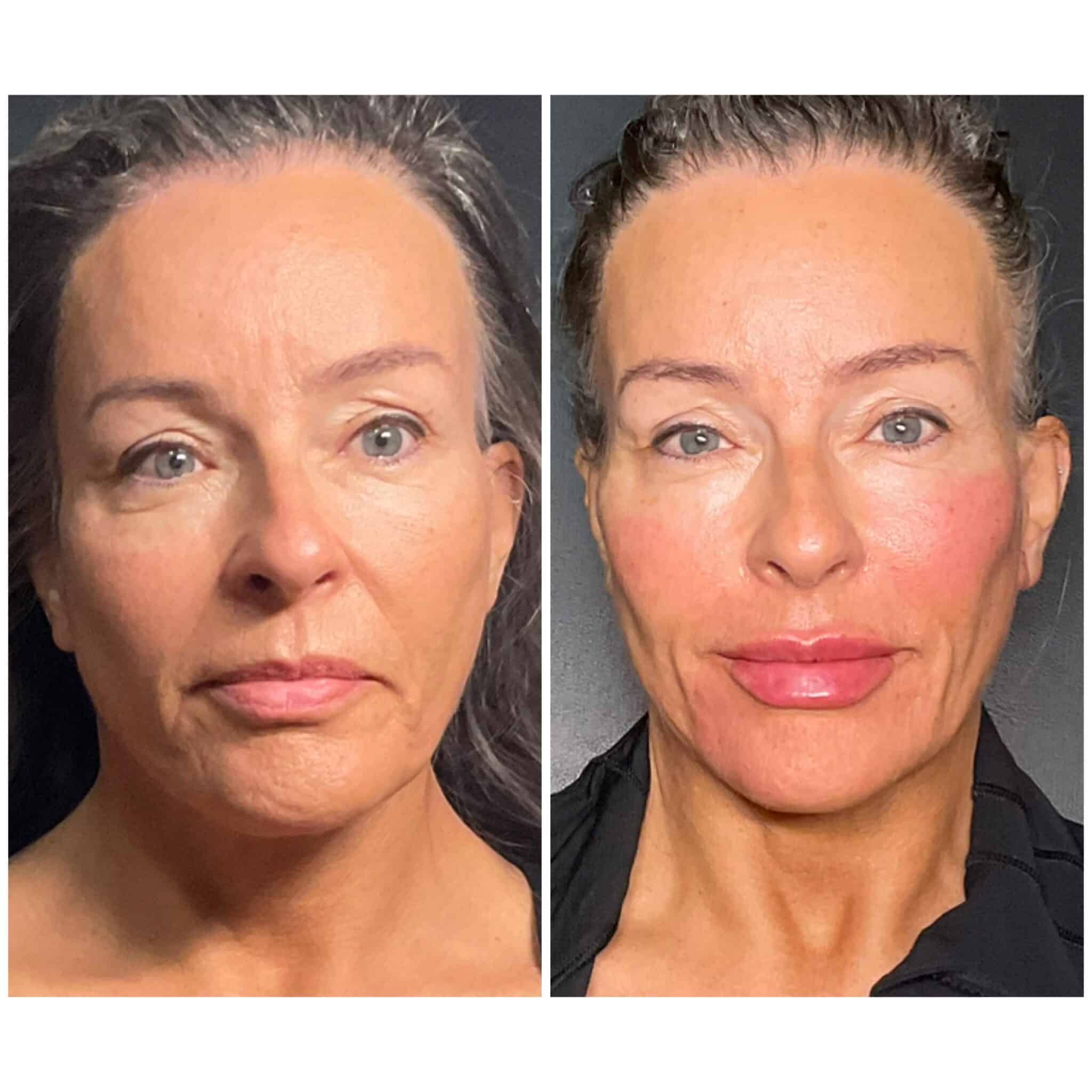
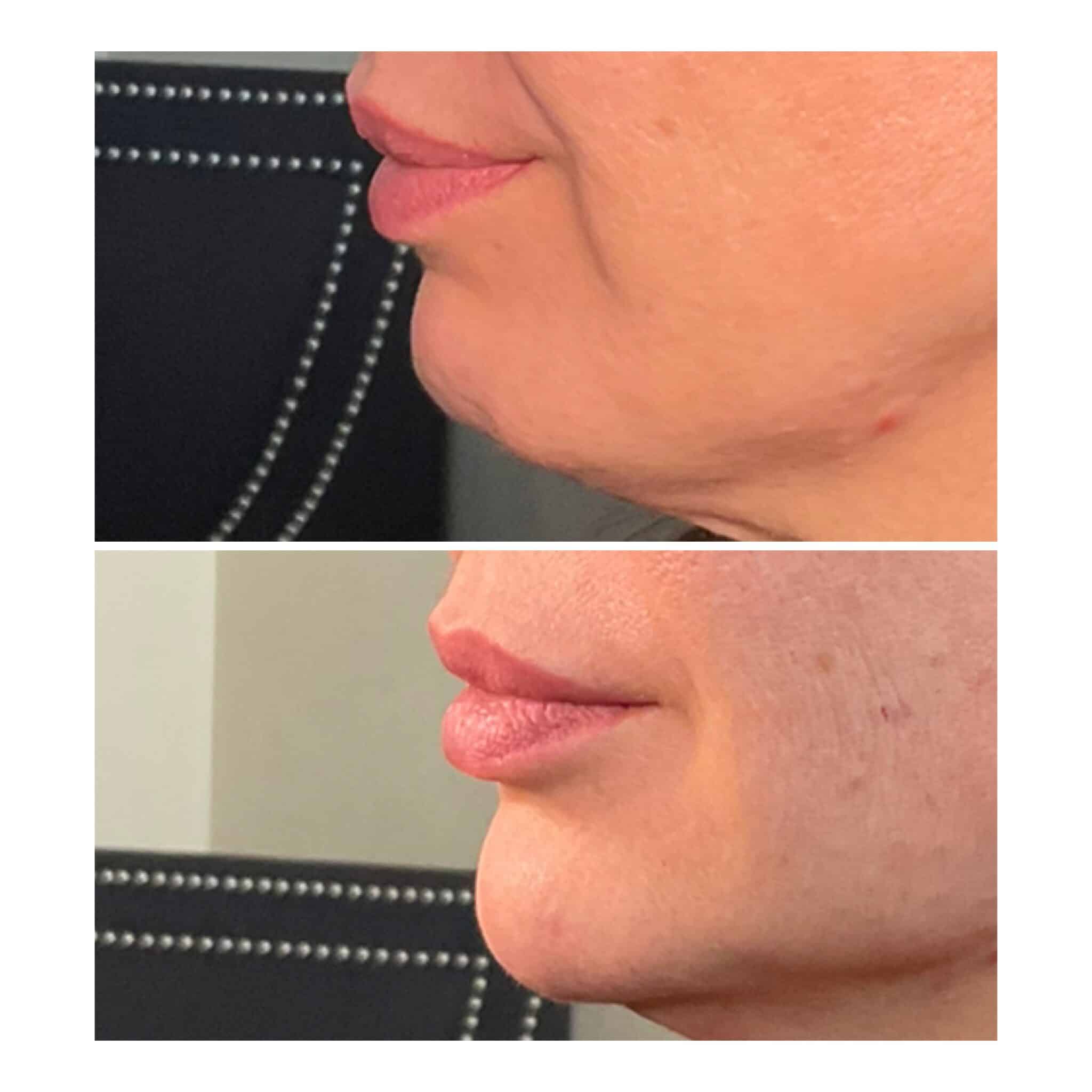
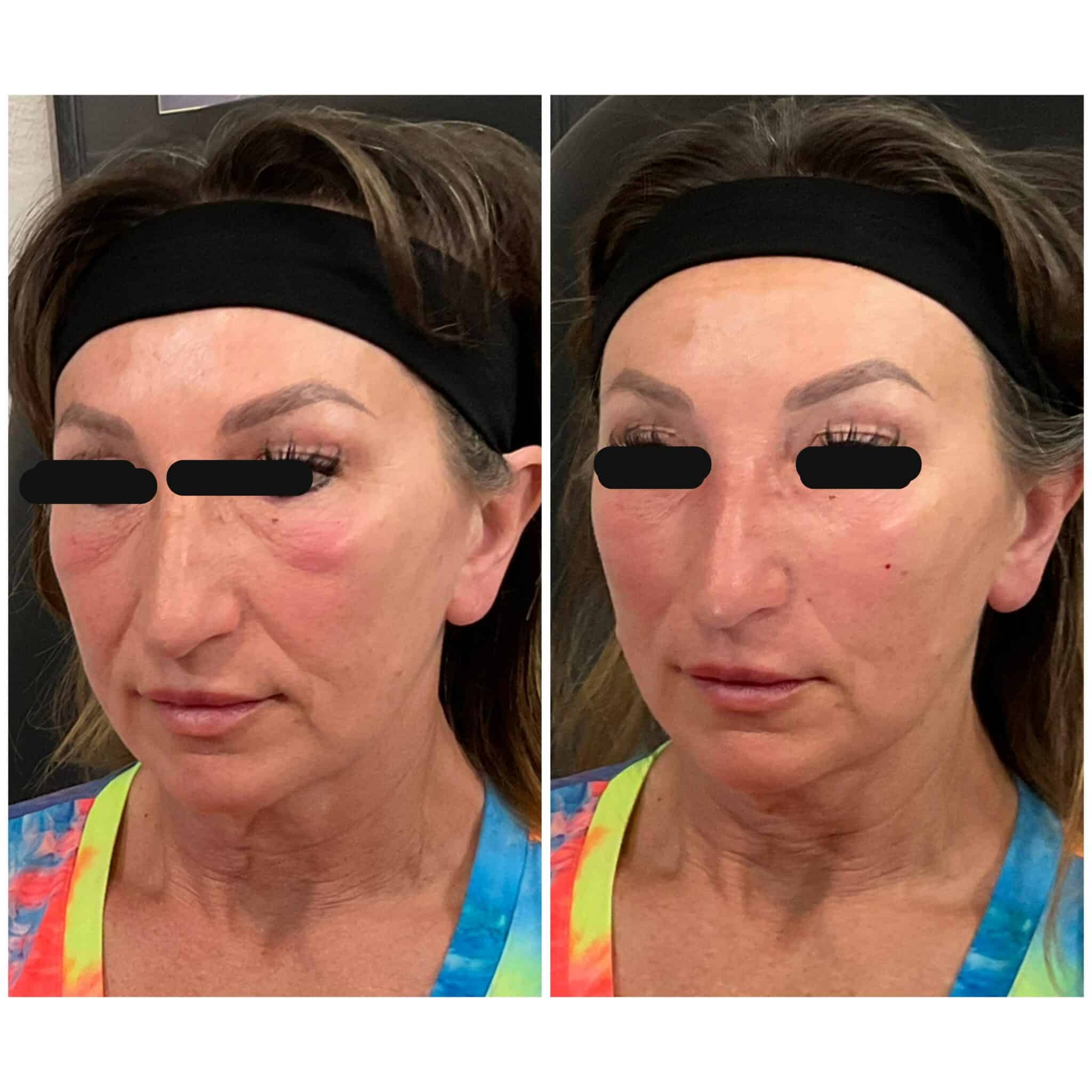
The most striking thing about great facial balancing is how subtle it looks. You won’t see a dramatically different face. You’ll see your face, with better proportions — a more defined jawline, fuller cheeks that lift the midface, a chin that balances the profile, lips that complement everything around them.
Every face is different, which means every result is different. During your consultation, our team will walk you through before-and-after examples of patients with similar concerns and facial structures so you can see what’s realistically achievable.
See more results in our before and after gallery.
How Facial Balancing Works
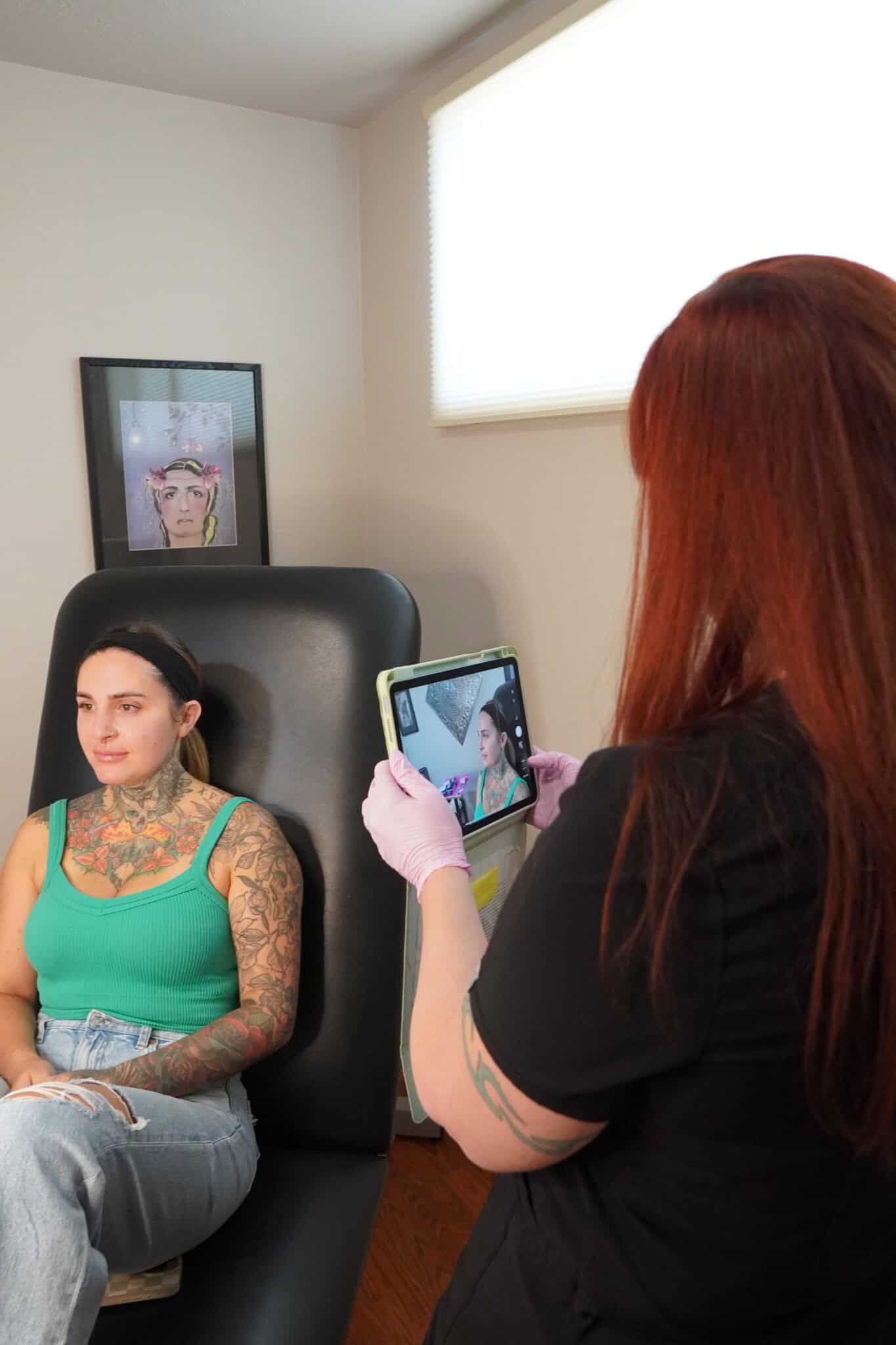
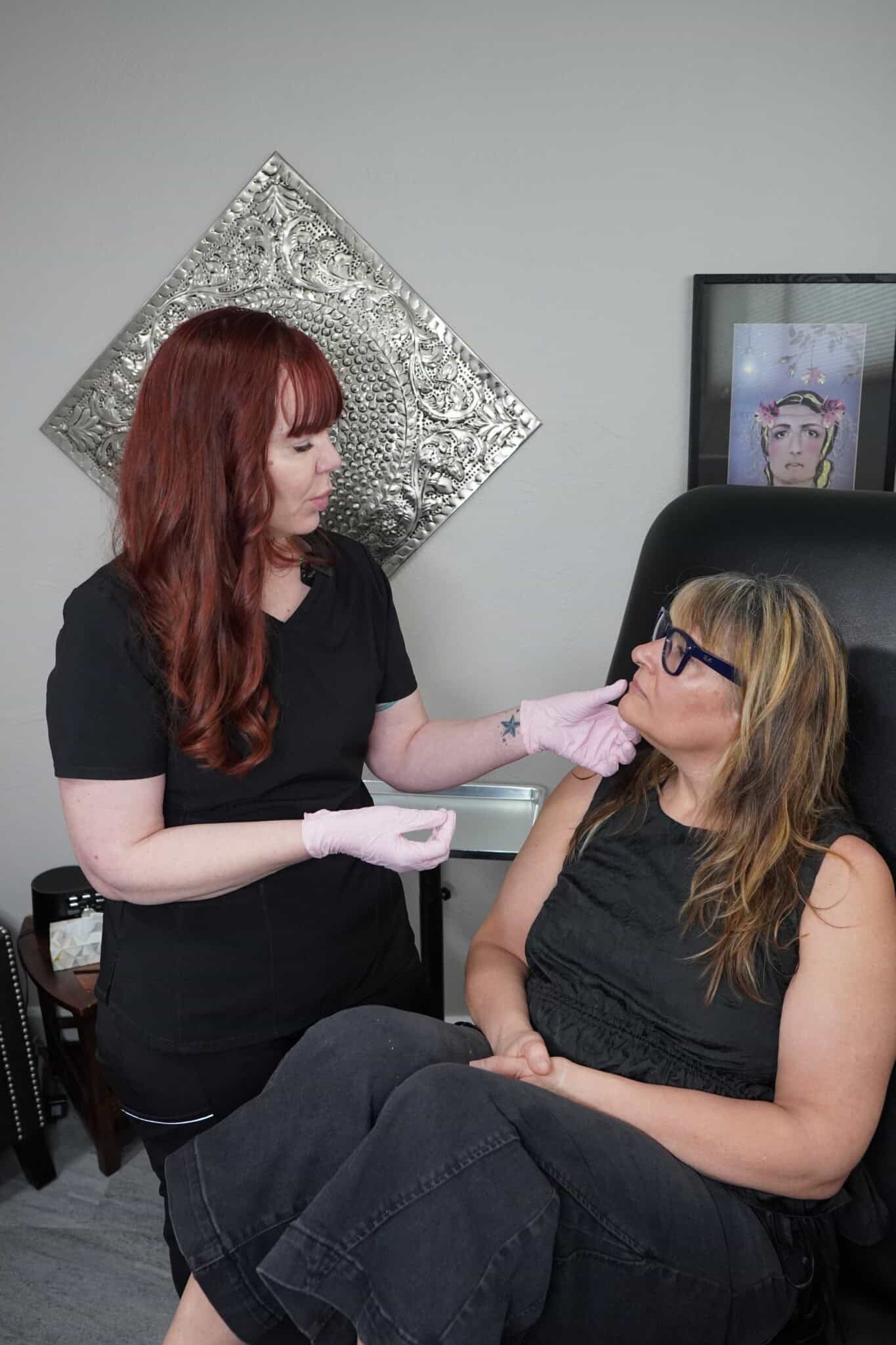
Every facial balancing treatment at Illume starts with a conversation. Your provider will spend time understanding what you see when you look in the mirror, what bothers you, and what you hope to achieve. Then comes the assessment — a detailed evaluation of your facial proportions, volume distribution, symmetry, and skin quality from multiple angles.
This isn’t a “come in and get poked” experience. The consultation is as important as the treatment. It’s where your provider maps out which areas need volume, which need lifting, which need refinement, and in what order. Some patients need two syringes of filler in a single session. Others benefit from a phased approach across two or three visits, building gradually so your face adapts naturally.
Areas We Address
Facial balancing can involve any combination of these treatment zones, depending on what your face needs:
- Cheeks — Restoring midface volume creates lift and structure. This is often the foundation of a facial balancing plan. Learn more about cheek fillers.
- Chin — Projection and definition that balances the lower face. A slightly recessed chin can make the nose appear larger and the jawline less defined. Chin support is often part of a broader dermal filler plan.
- Jawline — Contour and definition along the jaw. Especially impactful in profile view. Jawline refinement is typically part of a broader dermal filler treatment plan.
- Lips — Shape, symmetry, and proportion relative to the rest of your features. In a balanced face, the lips are the finishing touch, not the starting point. Learn more about lip fillers.
- Temples — One of the most overlooked areas. Temple volume loss creates a hollow, aged appearance. Restoring it can take years off without touching a single wrinkle.
- Under-eyes (tear troughs) — Hollowness beneath the eyes creates a tired look. Strategic filler here brightens the entire face.
- Nasolabial folds and marionettes — Softening these lines is often about restoring volume above them (cheeks), not just filling the lines themselves.
Fillers, Sculptra, and Botox — The Combination Approach
The best facial balancing results come from combining multiple tools — each one designed for a different job.
Dermal fillers add immediate volume, structure, and contour. Our team uses hyaluronic acid fillers from the Juvéderm and Restylane families, selecting specific products based on where they’re going. A firmer filler like Juvéderm Voluma for cheek structure. A softer one like Restylane Kysse for lips. A smooth, spreadable option like Belotero for delicate under-eye areas. The product matters as much as the placement.
Sculptra works differently from traditional fillers. Instead of adding volume directly, Sculptra stimulates your body’s own collagen production over time. It’s ideal for patients who’ve lost foundational volume across broader areas — temples, midface, jawline — and want results that develop gradually and last up to two years or more. Think of Sculptra as building the deep structural support that fillers and Botox then refine. For patients experiencing facial volume loss after weight loss, Sculptra is often the best starting point.
Botox and Dysport relax the muscles that pull features downward or create dynamic imbalance — a subtle brow lift, a softened jaw clench, a lip flip that complements new filler.
Many of our facial balancing plans combine all three: Sculptra for the foundation, fillers for targeted precision, and Botox for dynamic balance. Your provider will recommend the right combination based on your anatomy and goals.
If volume restoration is only one layer of what you’re seeing — and skin laxity or textural change are part of the picture too — our non-surgical facelift combines facial balancing with Profound RF and CO2 laser resurfacing for a more comprehensive approach.
How Much Does Facial Balancing Cost?
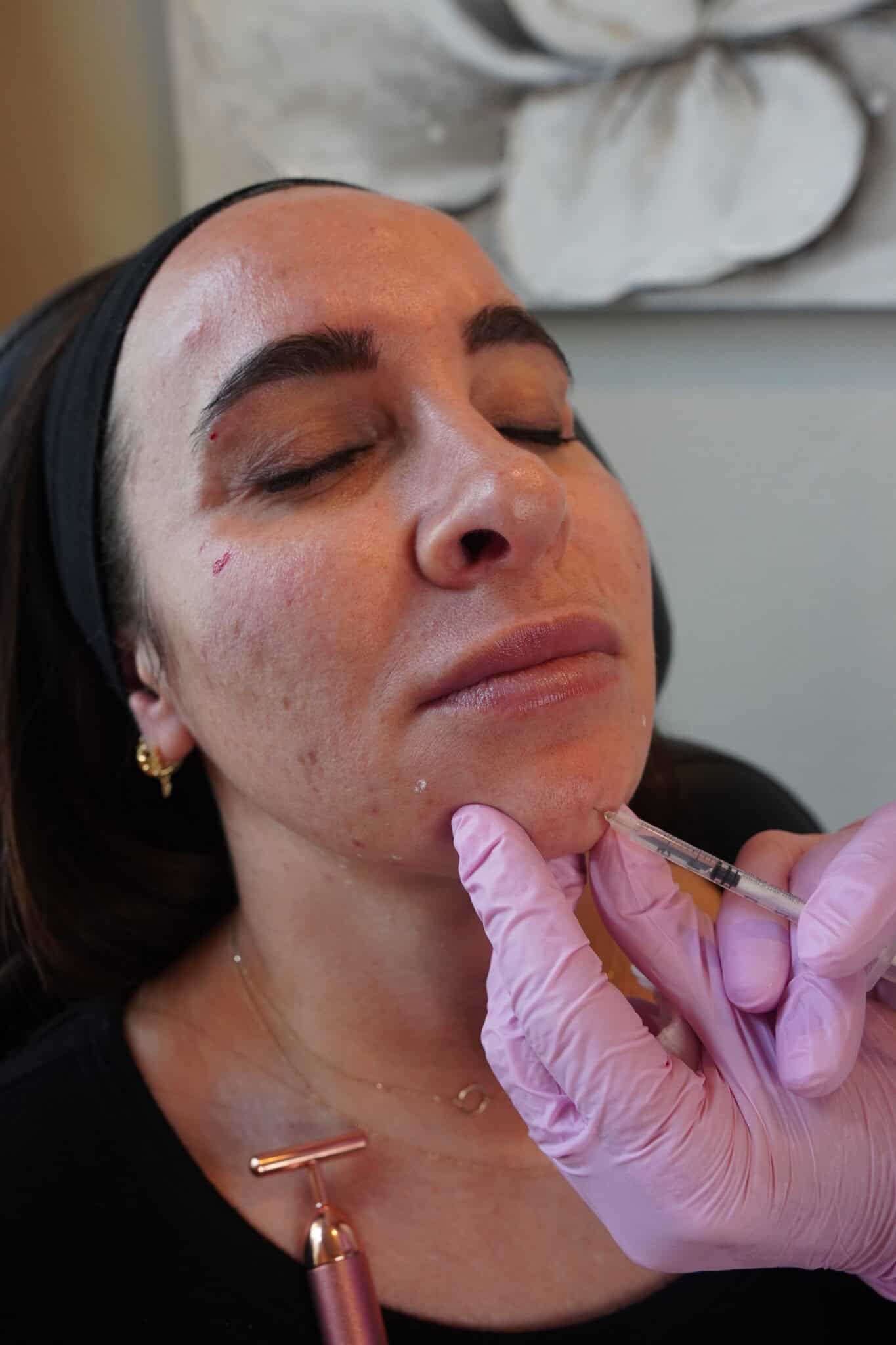
This is the question everyone asks, and the honest answer is: it depends. Your cost is shaped by how many areas need treatment, how much volume has been lost, which products your provider selects for each zone, and whether Botox is part of the plan alongside filler. A targeted treatment addressing one or two areas requires fewer syringes than a comprehensive full-face balancing session. Some patients achieve their goals in a single visit. Others prefer a phased approach, building gradually across two or three appointments.
Here’s what helps put the investment in perspective.
For patients considering structural changes to facial proportion, the surgical alternatives carry a very different price tag. A facelift averages $11,395 in surgeon fees alone according to the American Society of Plastic Surgeons’ 2024 data — but that’s just the surgeon. Add anesthesia, facility fees, and post-operative care, and a quality facelift with a board-certified specialist runs $20,000 to $50,000 or more depending on technique and region. Rhinoplasty starts around $20,000+ for a primary procedure. Even a chin implant — one of the more targeted surgical options — runs $10,000 to $15,000 with a quality surgeon. All of those come with general anesthesia, weeks of recovery, and permanent results you can’t adjust if your preferences change.
Injectable facial balancing achieves many of the same proportional improvements at a fraction of those numbers — with no surgery, no general anesthesia, minimal downtime, and results that evolve naturally with you over time. If you decide you want more definition in your jawline next year, or a slightly different lip shape, your plan adapts. Surgery doesn’t offer that flexibility.
That said, surgery is absolutely the right choice for some people. If you’re dealing with significant skin laxity or structural changes that fillers can’t address, we’ll tell you that honestly. Our job is to recommend what will actually work for your goals, not to sell you on a treatment that isn’t the right fit.
During your consultation, your provider will give you a specific treatment plan with clear pricing before any product is placed. No surprises, no pressure.
Our IllumèNaughty Beauty Bank membership program makes ongoing maintenance more accessible with member pricing on injectables — it’s designed to make self-care sustainable, not just a one-time splurge. We also offer financing options to help you invest in yourself on your timeline.
How Long Does Facial Balancing Last?
How long your results last depends on the products used and where they’re placed. Areas with more movement (like lips) metabolize filler faster than structural areas (like cheeks and chin).
| Area | Typical Duration | Maintenance Schedule |
|---|---|---|
| Cheeks (Voluma) | 12 — 18 months | Annual touch-up |
| Chin and jawline | 12 — 18 months | Annual touch-up |
| Lips | 6 — 12 months | Every 6-9 months |
| Under-eyes | 12 — 18 months | Annual touch-up |
| Temples | 12 — 24 months | Annual or less |
| Sculptra (collagen stimulation) | 2+ years | Annual touch-up |
| Botox/Dysport | 3 — 4 months | 3-4 times per year |
Here’s the good news: maintenance is less than the initial treatment. Once the foundation is built, you’re typically refreshing — not starting over. Most of our facial balancing patients settle into a rhythm that works for their budget and their goals.
Your provider will build a maintenance timeline during your initial consultation so you know exactly what to expect at 6, 12, and 18 months.
Facial Balancing vs. Individual Fillers
If facial balancing uses the same products as regular filler treatments, why not just get lip filler or cheek filler on its own?
You absolutely can. But here’s what we see regularly: a patient comes in wanting fuller lips. We do a full assessment and discover that what’s actually making her lips look thin is volume loss in the cheeks above them. The midface has dropped, flattening the upper lip and creating a longer appearance between the nose and mouth. If we only fill the lips, they’ll look fuller — but the proportions will still be off.
Facial balancing catches those connections. It asks the question individual treatments don’t: is this feature the actual issue, or is it a symptom of something happening somewhere else on the face?
That doesn’t mean every patient needs full facial balancing. Sometimes lip filler is exactly the right call. The value of the facial balancing approach is in the assessment — looking at the whole picture before deciding where to place a single drop of product.
Why Choose Illume for Facial Balancing
Not all injectors approach facial balancing the same way. Here’s what sets Illume apart:
Advanced Injectable Training — Our team includes injectors with advanced certification and thousands of treatments completed. Facial balancing requires understanding facial anatomy at a level that goes far beyond basic injection technique.
A Whole-Face Philosophy — We don’t upsell areas you don’t need. We don’t push product volume. We start with your goals and your anatomy, and we recommend only what will actually improve your proportions. Sometimes that means doing less than you expected.
Conservative, Natural Results — The goal is never to look “done.” Our team specializes in results that make people say “you look amazing” — not “did you get work done?” We believe in the power of subtle refinement over dramatic transformation.
Hundreds of Five-Star Reviews — Our patients trust us, and that trust shows. With hundreds of five-star Google reviews, Illume is one of the highest-rated aesthetic practices in Southern Oregon.
Comfort-Focused Experience — Injectable treatments don’t have to be stressful. We use topical numbing, and for patients who want extra comfort, NitroNox (laughing gas) is available to take the edge off during treatment.
Your Plan, Your Pace — Whether you want to address everything in one session or build gradually over several visits, we design a plan that fits your comfort level and your budget.
Let’s get started. Schedule your facial balancing consultation or call us at (541) 631-8387.
Frequently Asked Questions
Is facial balancing worth it?
For most patients, yes. The reason facial balancing has become one of the most popular injectable approaches is that it produces results that look more natural than treating individual features in isolation. When your proportions are balanced, every feature looks better — even the ones you didn’t treat. The investment is higher than a single syringe of lip filler, but the result is a cohesive, refreshed appearance rather than one feature that stands out.
Is facial balancing painful?
Most patients describe the discomfort as mild — a slight pinch or pressure. We apply topical numbing cream before treatment, and most of the fillers we use contain lidocaine (a built-in anesthetic) that numbs the area as the product is placed. For patients who are nervous about needles or want extra comfort, we offer NitroNox (nitrous oxide) during treatment. The vast majority of our patients say it was much easier than they expected.
How many syringes do I need for facial balancing?
It depends entirely on your anatomy and goals. A targeted two-area treatment might use 2 syringes. A comprehensive full-face balancing could require 4-6 syringes, sometimes spread across multiple appointments. During your consultation, your provider will give you a specific recommendation with syringe counts so you know exactly what to expect.
Can facial balancing be reversed?
Yes. The hyaluronic acid fillers we use (Juvéderm, Restylane, Belotero) can be dissolved with an enzyme called hyaluronidase. If you’re unhappy with any aspect of your results, your provider can adjust or reverse the treatment. This is one of the key safety advantages of hyaluronic acid fillers over permanent alternatives.
Is facial balancing permanent?
No. Dermal fillers are gradually absorbed by your body over 6-18 months depending on the product and placement area. Botox and Dysport typically last 3-4 months. This means your results evolve naturally over time, and maintenance treatments keep you looking refreshed. Many patients appreciate that the results aren’t permanent — it allows you to adjust your look as your preferences and features change over time.
What’s the difference between facial balancing and facial harmonization?
They’re the same concept, just different names. Facial harmonization is more common in international aesthetics communities, while facial balancing is the term most used in the United States. Both refer to the practice of using injectables to improve facial proportion and symmetry by treating multiple areas of the face together rather than individually.
Who is a good candidate for facial balancing?
Most adults in good health who are noticing volume loss, asymmetry, or proportional changes in their face are good candidates. Facial balancing is especially effective for patients who feel like something is “off” but can’t pinpoint exactly what it is — that’s often a sign that the issue is proportional, not isolated to one feature. During your consultation, we’ll assess your facial structure and let you know honestly whether facial balancing is the right approach or whether a more targeted treatment would serve you better.
What should I expect after facial balancing?
Mild swelling and possible bruising for 2-5 days, depending on how many areas were treated. Most patients return to their normal routine the same day or the next morning. We’ll provide specific aftercare instructions — avoid intense exercise for 24 hours, skip alcohol for the evening, and don’t press or massage the treated areas. Your results will settle into their final shape over 2 weeks as any swelling resolves and the filler integrates with your tissue.
Schedule Your Facial Balancing Consultation
The best way to find out what facial balancing can do for you is to sit down with one of our providers and talk through your goals. No pressure, no obligation — just an honest conversation about what’s possible.
Call us: (541) 631-8387
Illume Aesthetics 993 Siskiyou Blvd Suite 1 Ashland, OR 97520 Monday — Friday, 9am — 5pm